Booking a Visit
Buena Park sits about 18 miles from our shop in Irvine, which makes it one of the farther stops on the route. We don't keep a branch or a drop box out here, so we can't promise the same arrival window we'd quote a closer street. What we can do is schedule the truck for a set block of time and work the job properly once we're on site, instead of rushing to beat traffic back. If you're calling about a spring that let go or a door stuck halfway up, tell us that up front so we bring the right parts the first trip. Book through the Buena Park service page and we'll confirm a time before the truck leaves Irvine.
Because of the distance, we try to batch Buena Park calls when we can, so a flexible window on your end helps us get there sooner. We're not going to pretend that's the same as a depot around the corner. It isn't. But the work itself doesn't change with the mileage, and we bring everything needed to finish a torsion spring job or a track realignment in one visit.
What Causes It Around Here
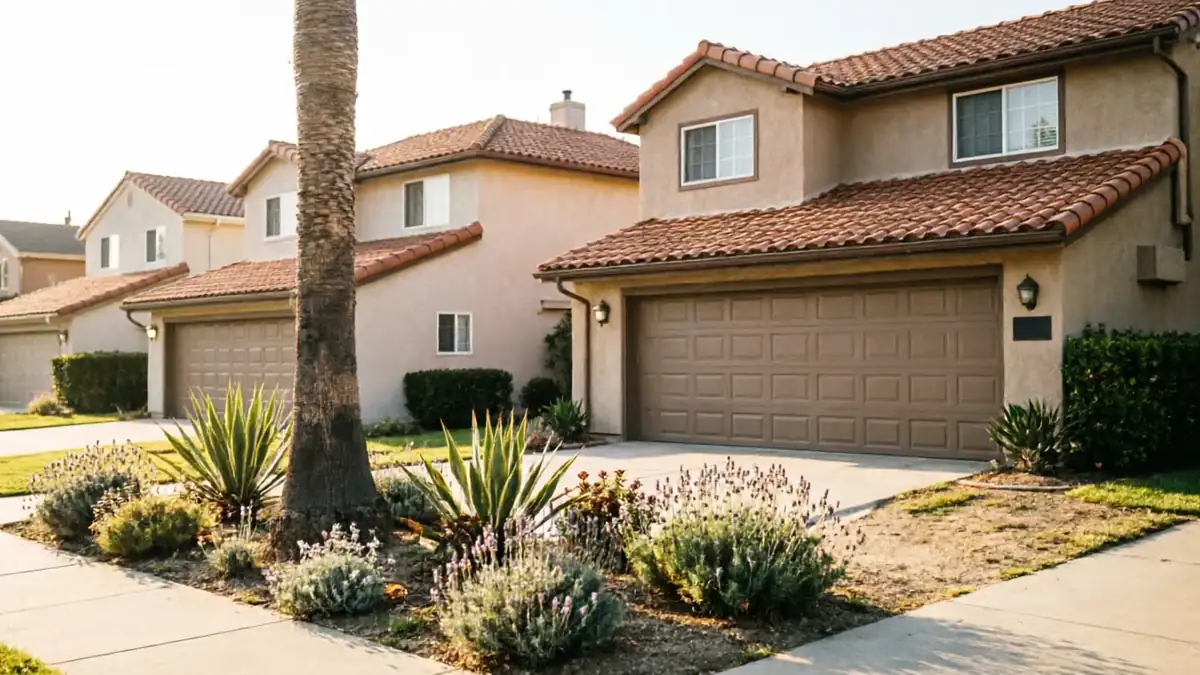
The median house in Buena Park went up around 1966, roughly a decade ahead of the median build year across the broader area we cover, which sits closer to 1976. That decade matters. A door from 1966 has had almost sixty years to work through its original hardware, and in a mild coastal climate without hard freezes or heavy snow load, there's rarely been a dramatic event that forced a replacement. No burst pipe, no ice-jammed track. Instead the wear is slow: a torsion spring that's cycled tens of thousands of times, a cable strand that's frayed one wire at a time, rollers that have worn their bearings down to bare steel.
Most of this area's housing stock dates to the 1960s and 70s, and that matters for parts. Doors from that era were built with different track widths and spring sizing than what's sold today, so a repair sometimes means sourcing hardware that isn't a straight off-the-shelf match. It's one reason a quick look at the door before we quote anything saves everyone a second trip.
What Can Go Wrong
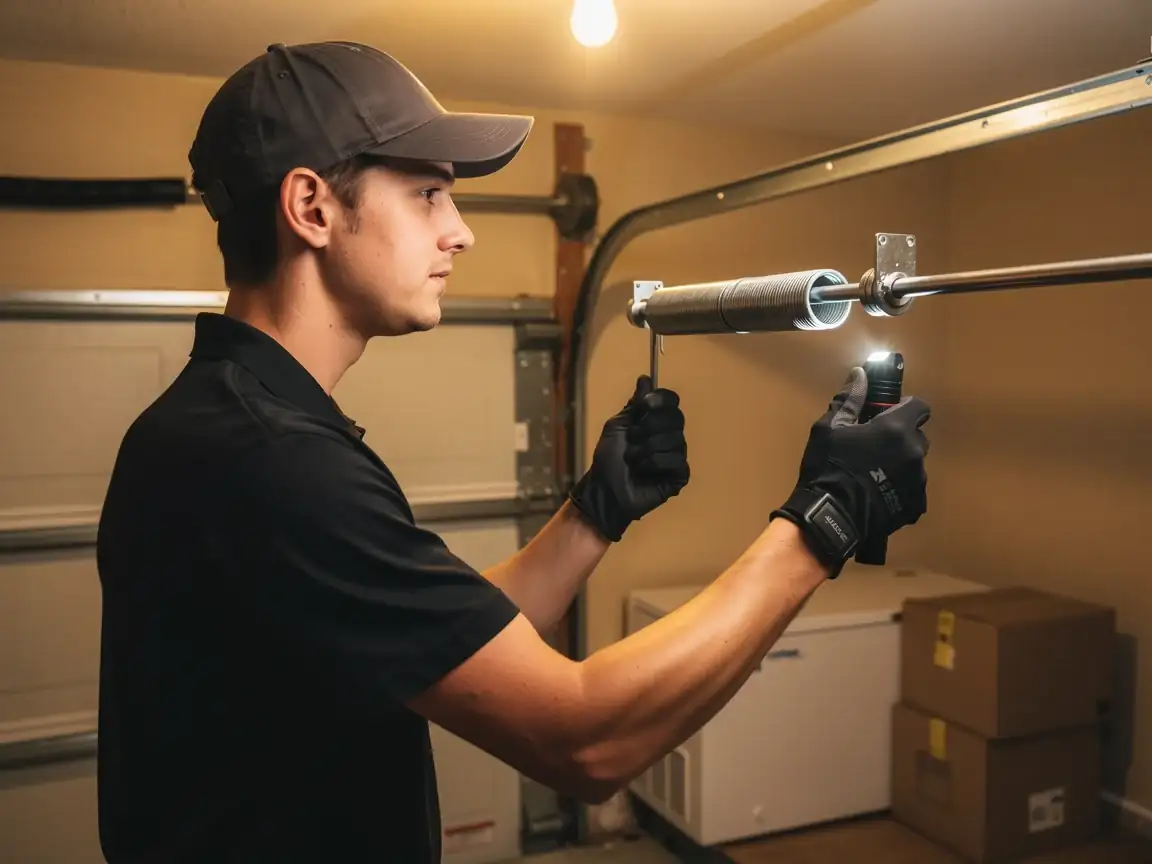
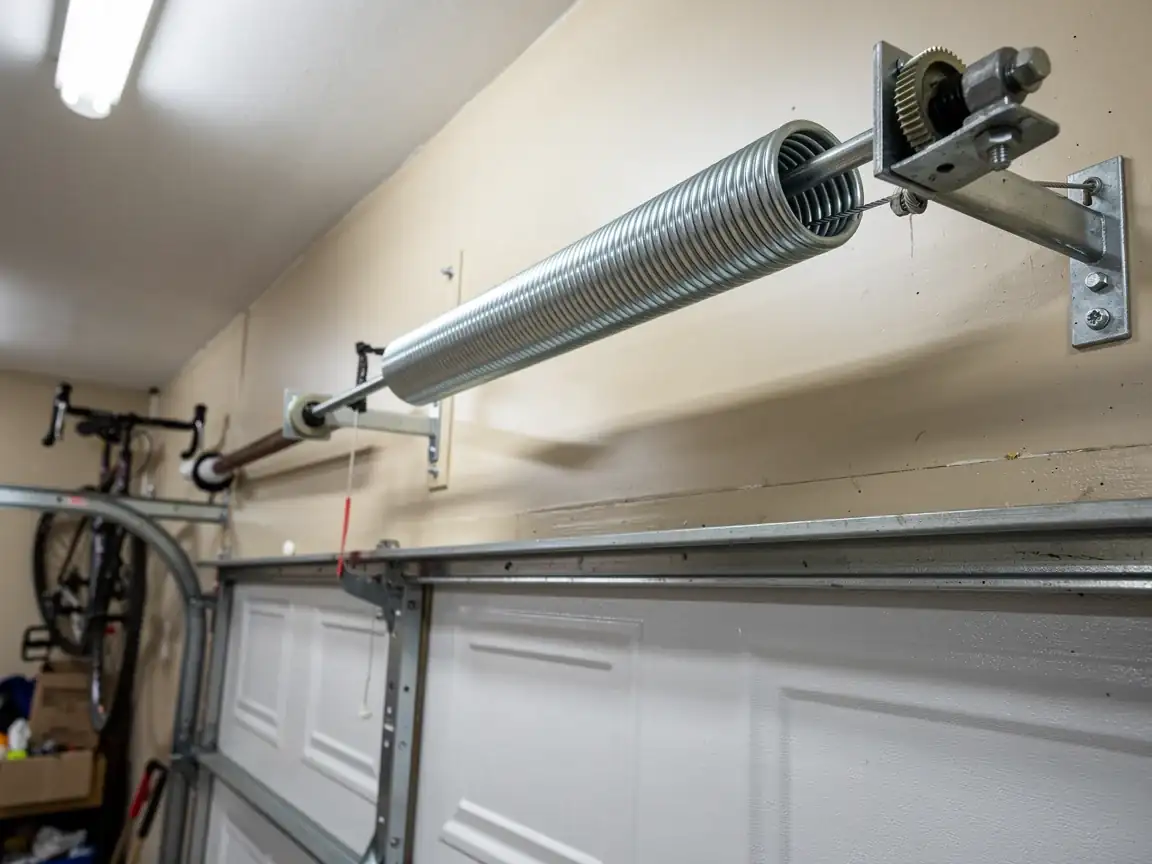
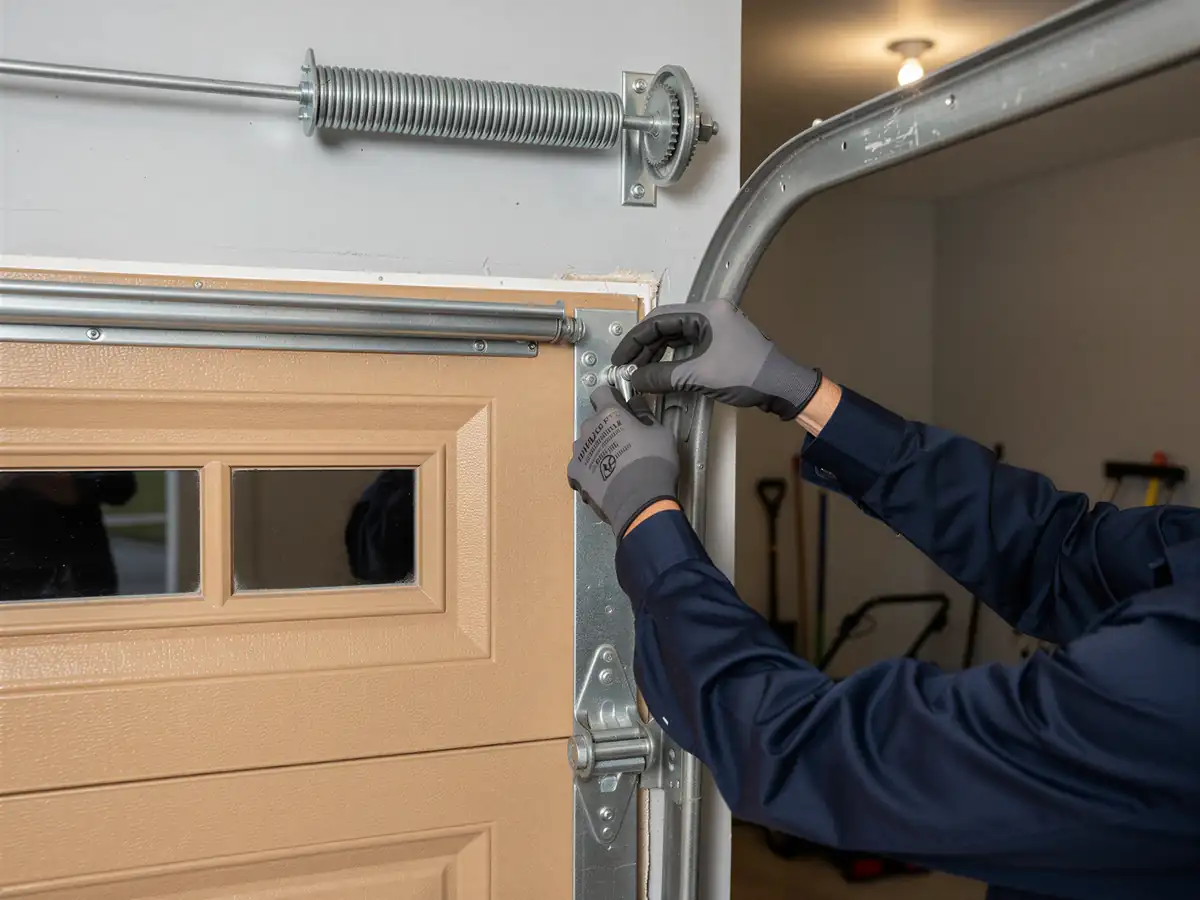
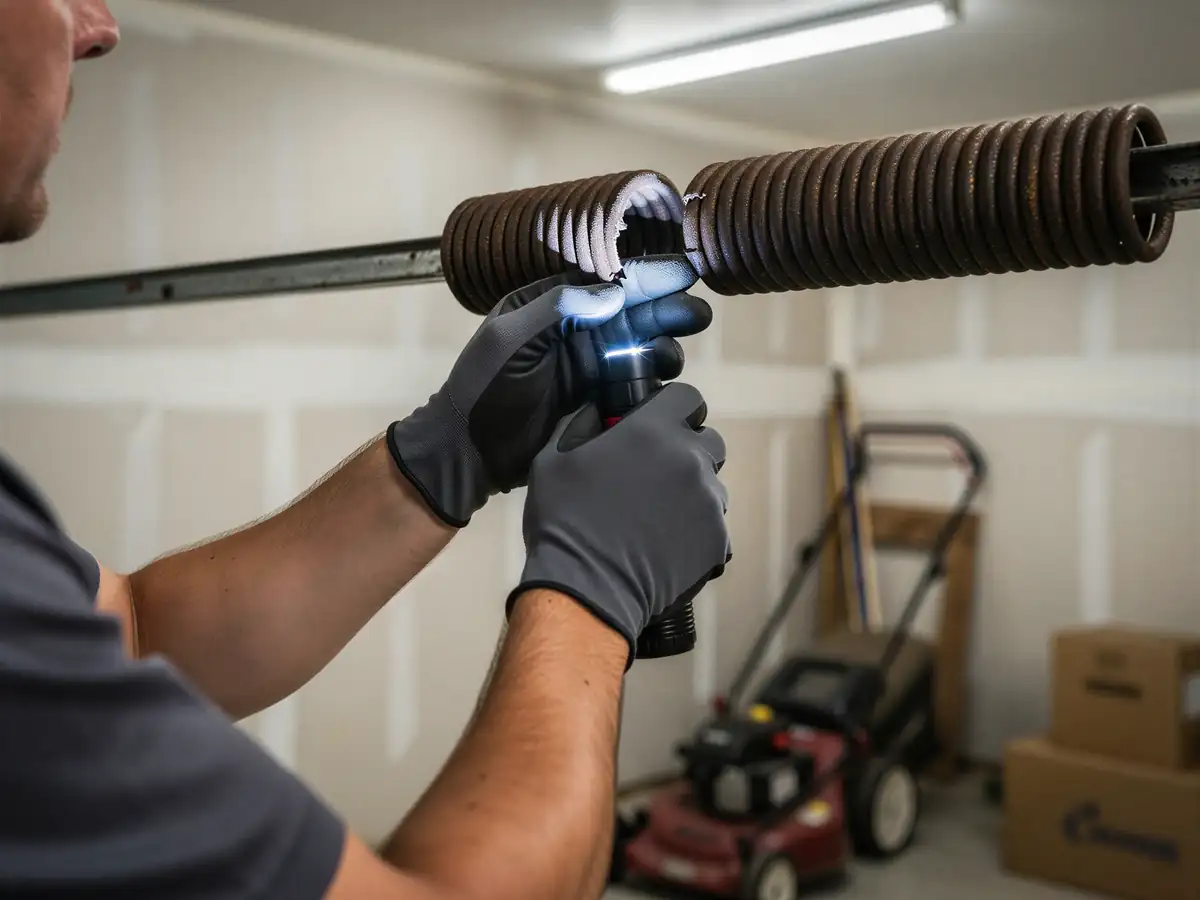
On a door this age, the torsion spring is the part most likely to fail without warning
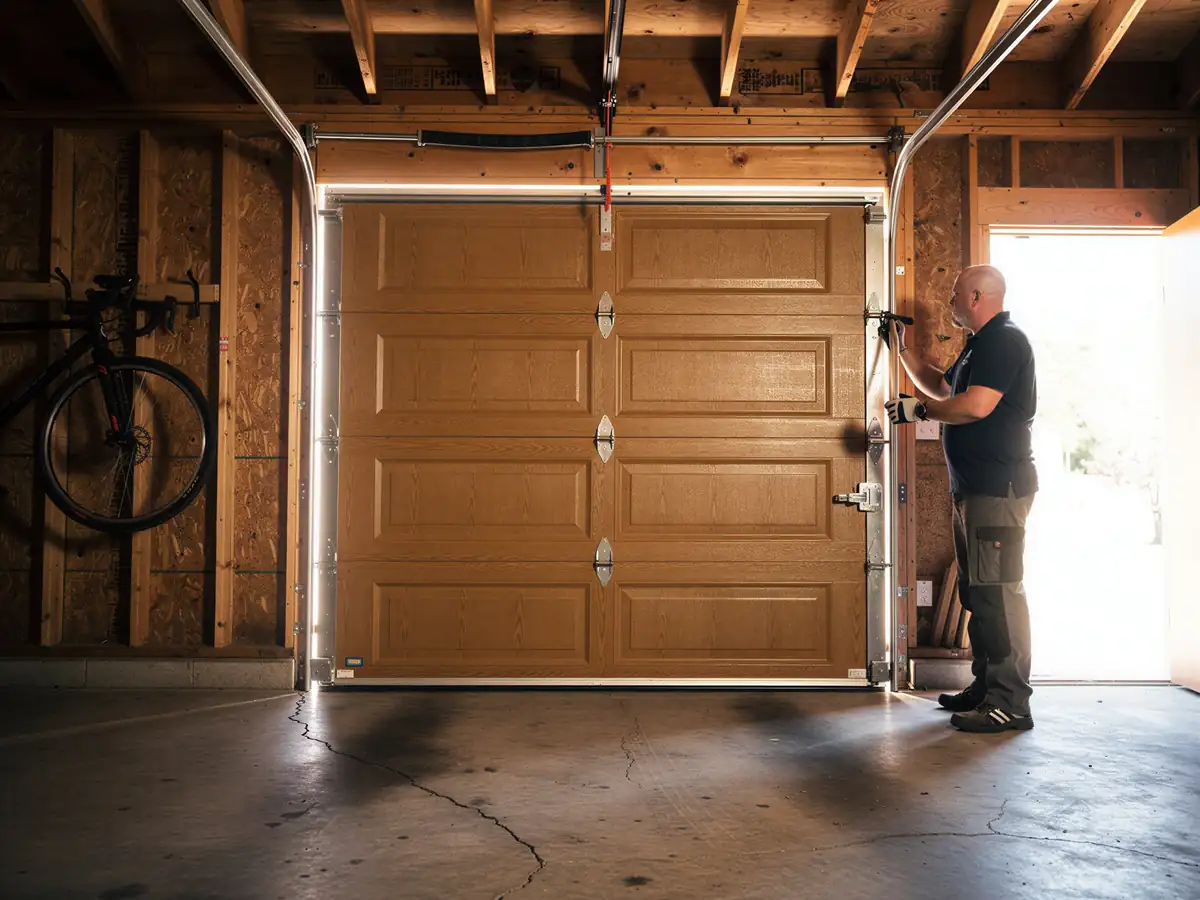
Usually with a bang loud enough to bring someone running. If the door was ever converted from extension springs to torsion, or vice versa, that's worth knowing before a repair starts, since the drum, cable routing, and anchor bracket all differ. Cables fray at the roller end first, and on a door that's never had the cable replaced, a frayed strand under tension is a real hazard, not a cosmetic issue.
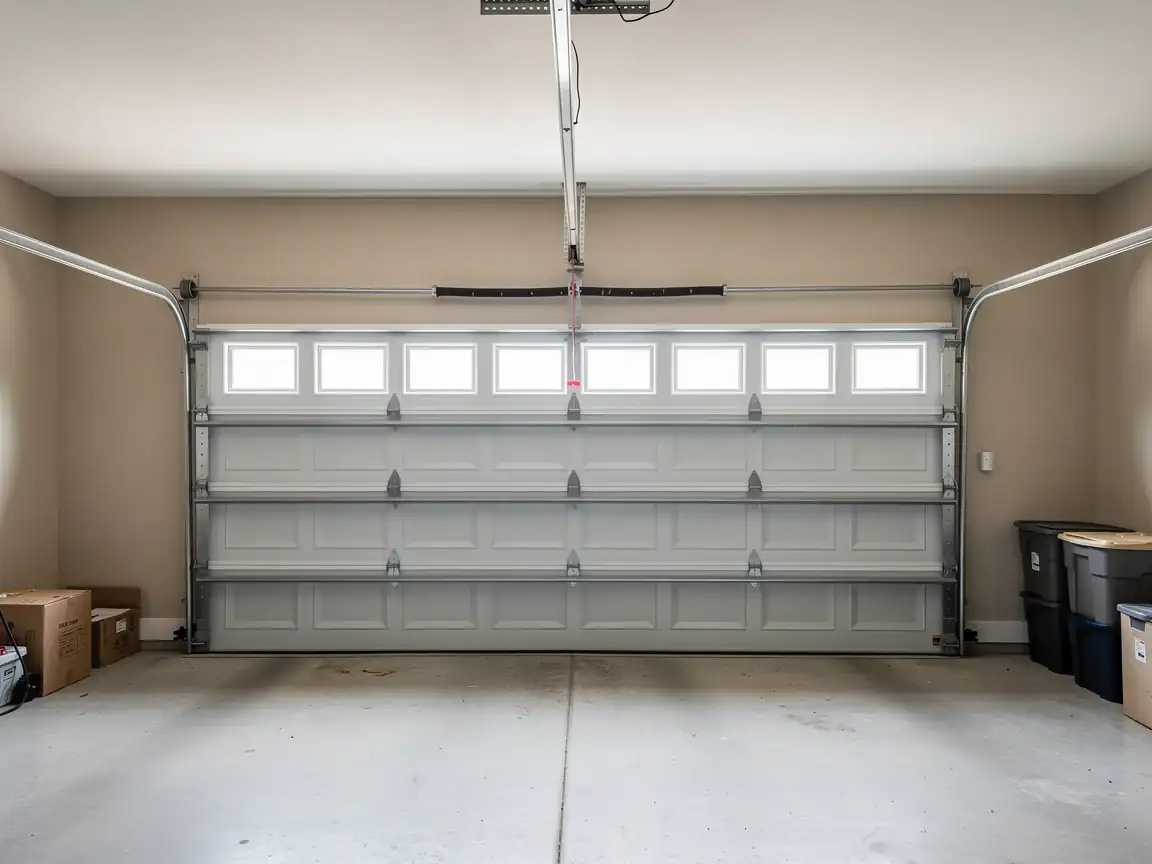
Tracks on mid-1960s doors were often set with less clearance than current code calls for
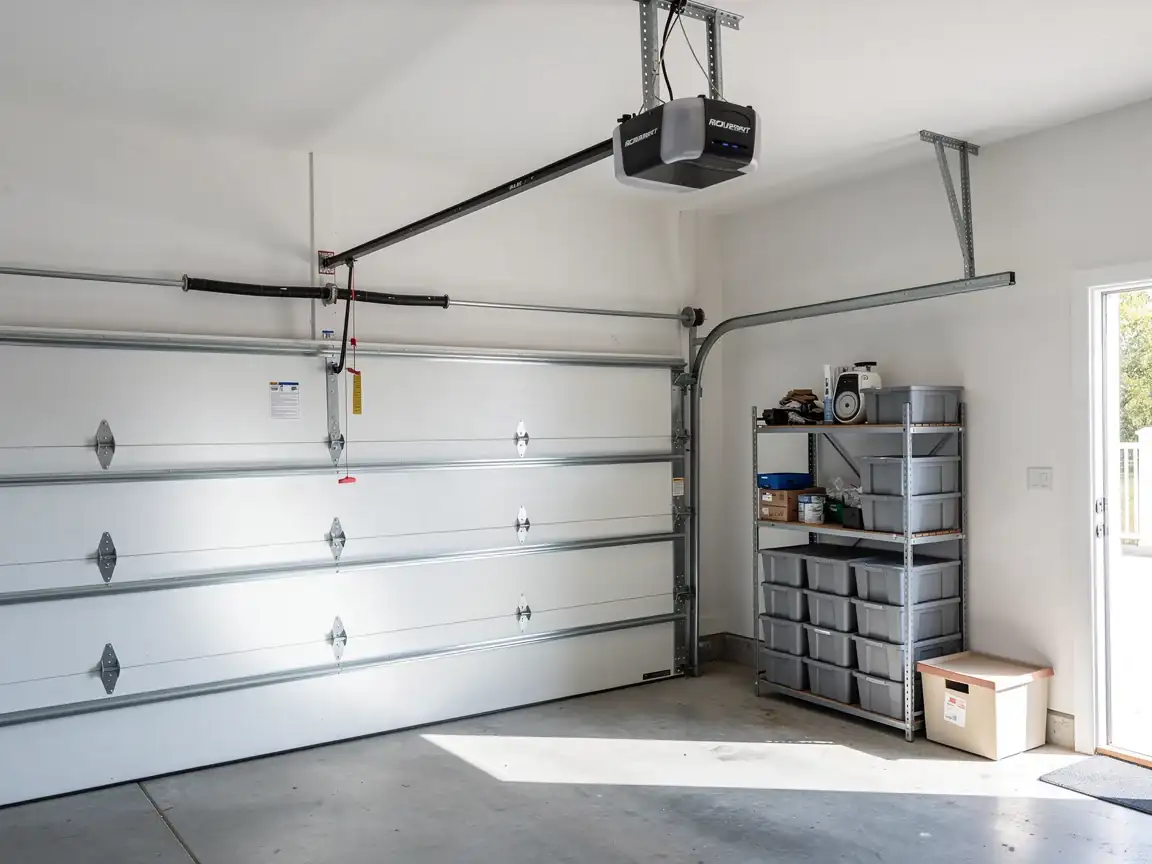
So a door that's slightly out of plumb can bind a roller every few cycles instead of running clean. Openers are usually the newest part on these doors, since most chain-drive and belt-drive units installed before the 2000s have already been swapped once. If yours hasn't, the motor and the drive gear are both due.
What You Are Seeing
A door that stops a few inches off the floor and won't finish closing is usually a spring losing tension, not an opener problem, even though the opener gets blamed first. A loud bang from the garage followed by a door that won't lift at all is almost always a broken torsion spring, and the door becomes dangerously heavy to lift by hand at that point. Grinding or scraping on the way up points to a roller that's worn through its bearing or a track that's shifted out of alignment.
If the door reverses right after the opener engages, check the travel limits before assuming the motor is failing. A door that lifts unevenly, with one side higher than the other, usually means one cable has stretched or frayed more than its pair. None of these are outside the ordinary for a house from the 1966 era. It's what we expect to find on most calls out this way.
Can You Do This Yourself
Adjusting travel limits on the opener, tightening loose hardware, and lubricating rollers and hinges are all reasonable DIY tasks, and doing them regularly extends the life of everything else on the door. Replacing a torsion spring is not something to take on without the right bars and a clear understanding of how much stored energy is in that coil. People lose fingers and worse on this specific job every year, and it's the one repair where we'd rather talk you out of it than walk you through it.
The honest limitation on our end: if the door is old enough that the track width or spring size is no longer a stocked item, we may need to order a part rather than finish same-visit, and we'll tell you that before we start rather than after. On a house from the mid-1960s, that's not rare. Replacement sometimes beats a third repair on the same worn-out spring, and we'll say so if that's where the numbers land.