The Common Mistake
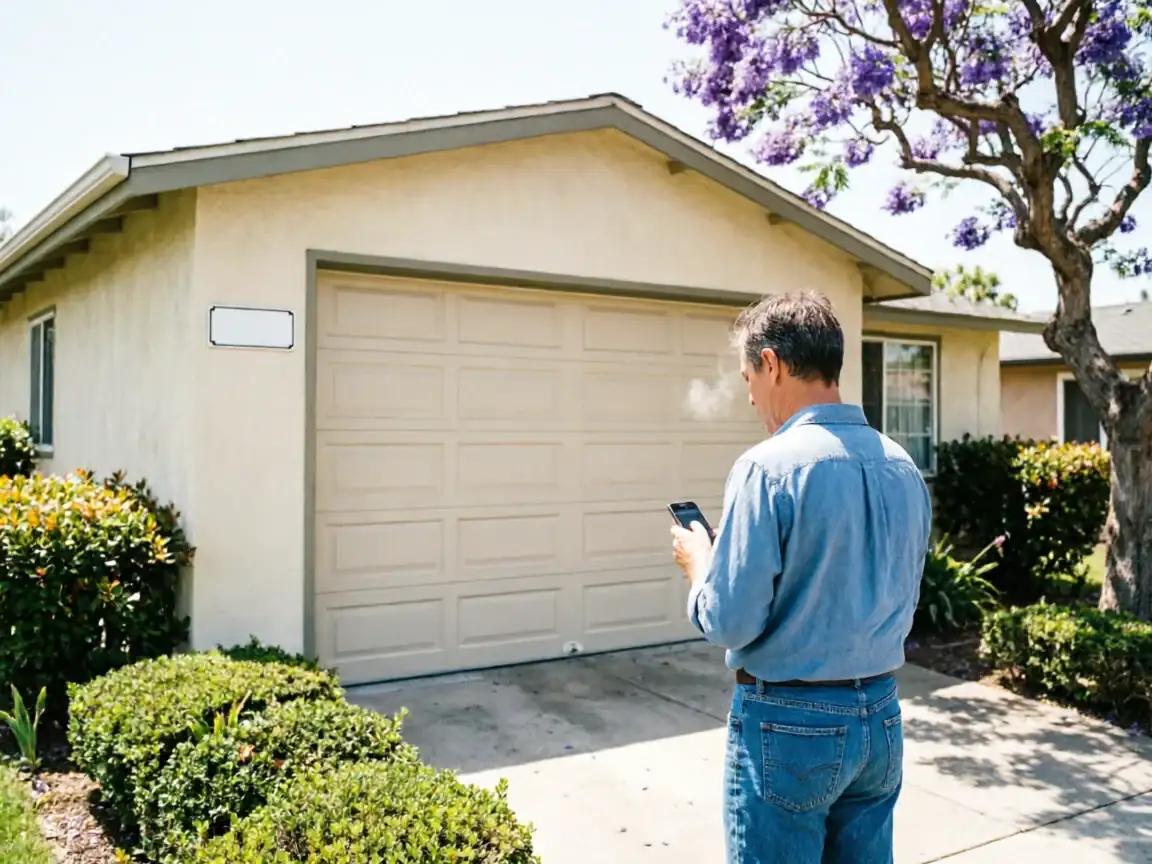
Most homeowners in villages like wait until the door won't open at all before they call anyone. That's backwards. A door doesn't fail silently - it tells you weeks in advance, usually with a sound nobody bothers to translate. The mistake isn't ignoring a broken door. It's hearing a new sound, deciding it's probably fine, and closing the garage on it for another six months.
Part of this comes from how spread out Irvine's housing stock is in age. With construction running from 1938 through 2015 and a median build year around 1976, you've got doors and openers from wildly different hardware generations sitting a few driveways apart. A noise that's normal wear on a 2015 build can be a warning sign on a door installed when the house was built in the 70s. Treating every garage the same way, regardless of when the house went up, is how a ten-minute roller swap turns into an emergency spring call on a Saturday.
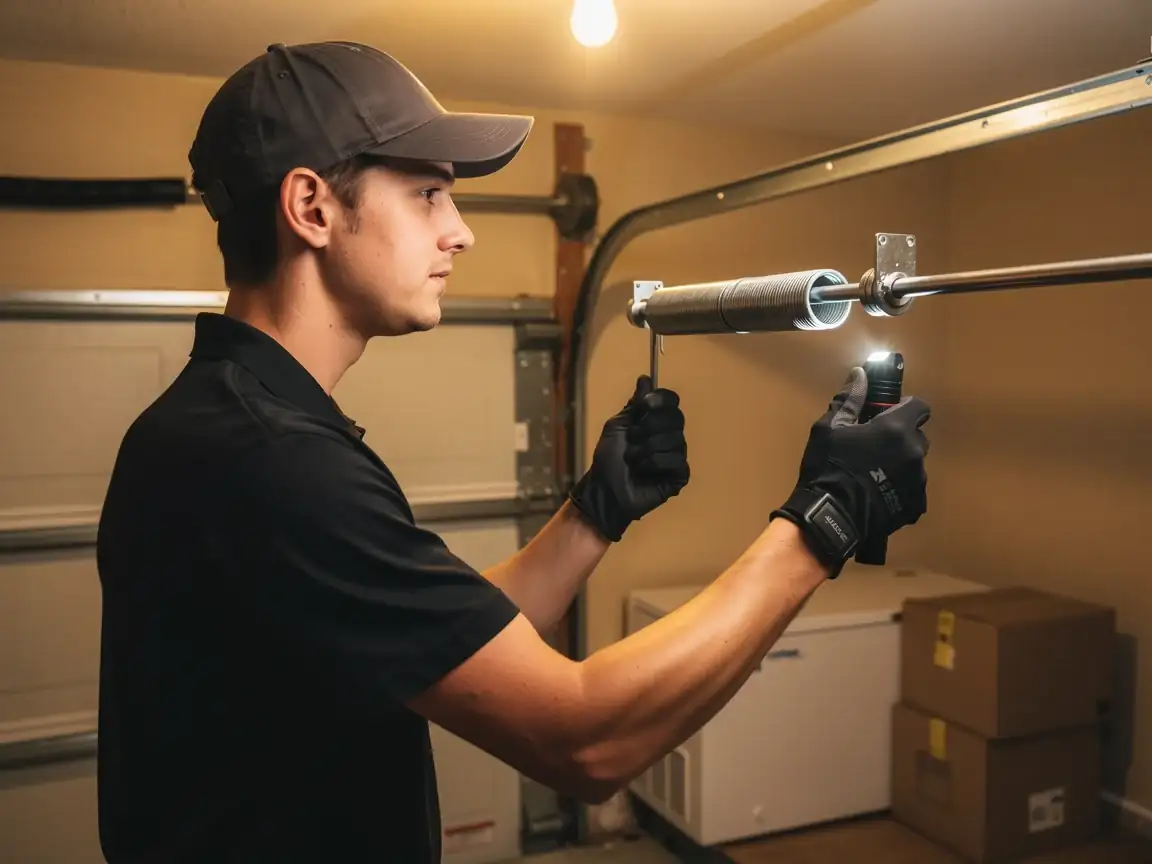
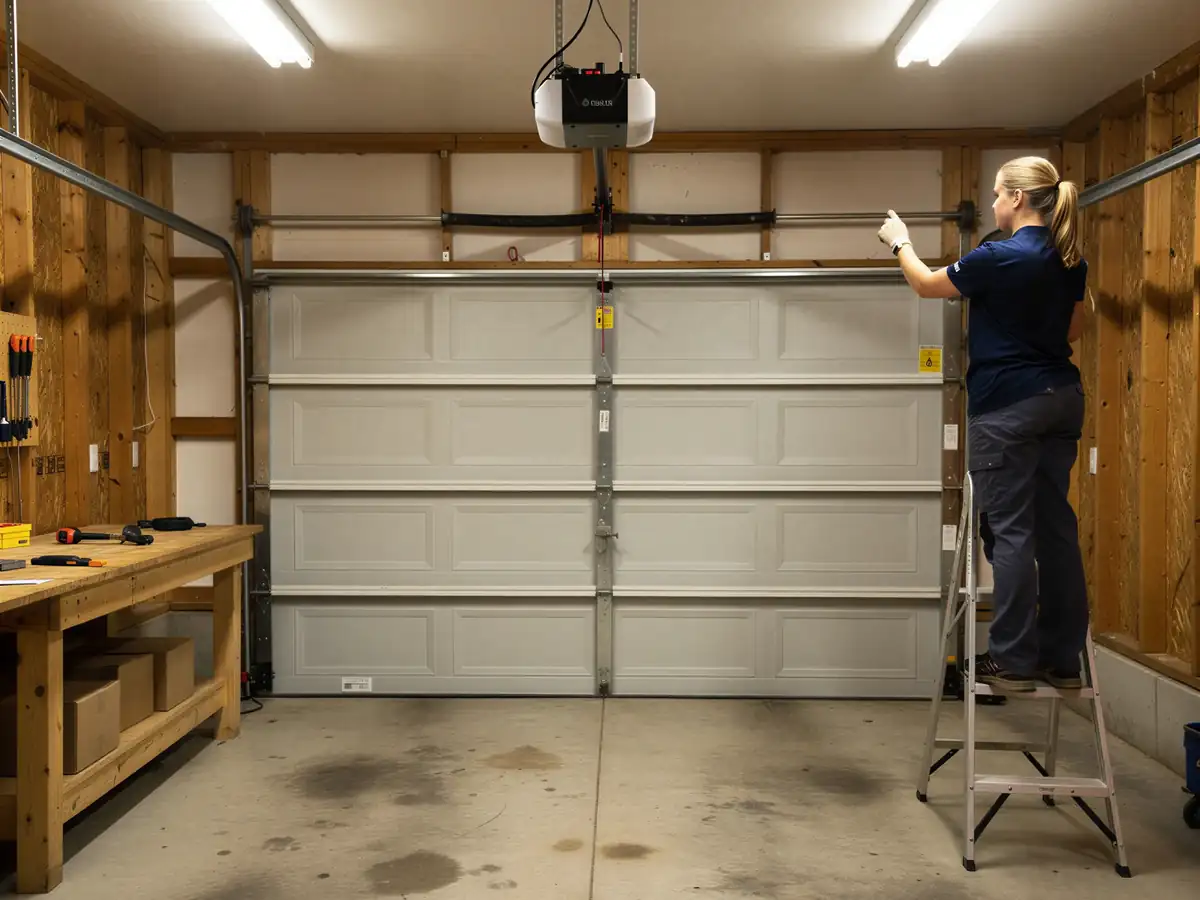
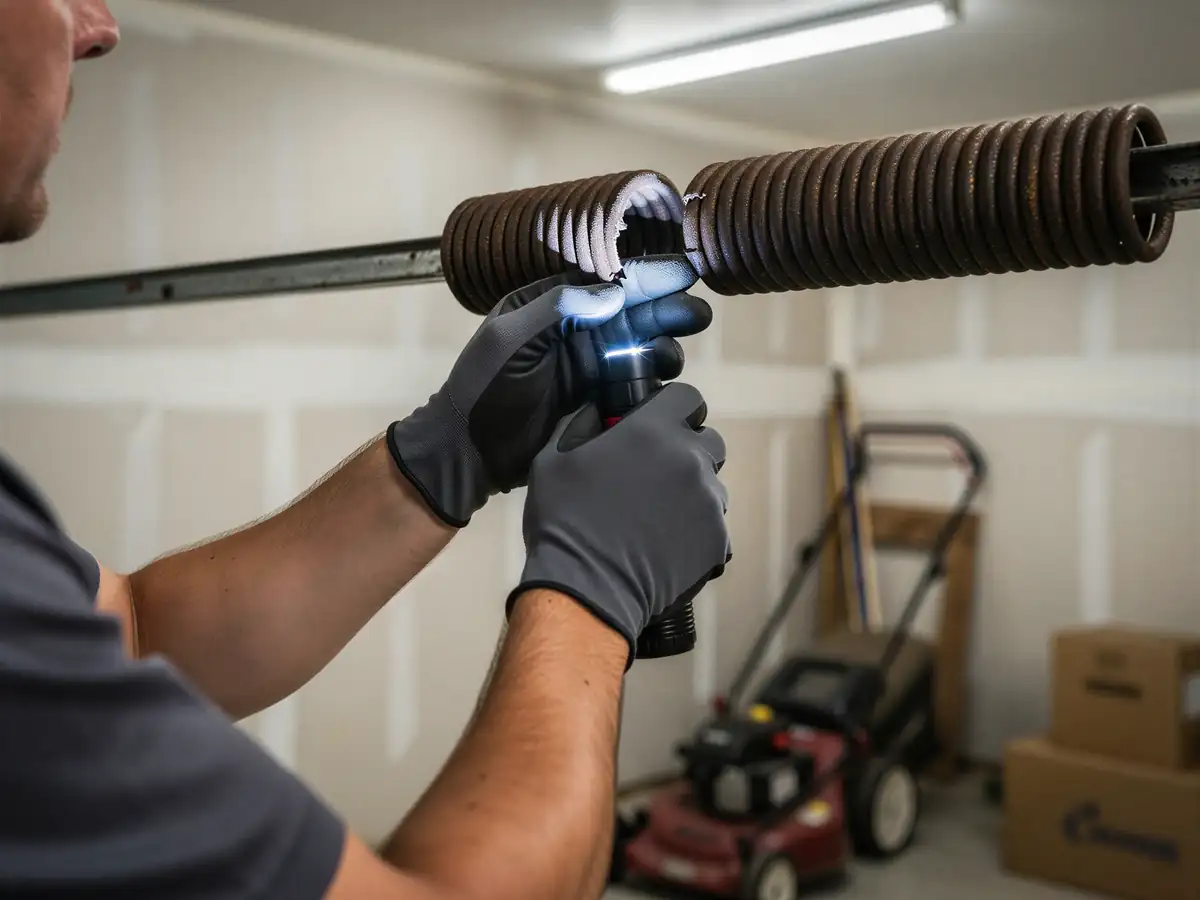
We don't inspect springs for free on every visit - if yours is original to a 1970s build, we'll tell you that up front before we touch anything, because by then it's usually not a question of if, just when.
The Problem
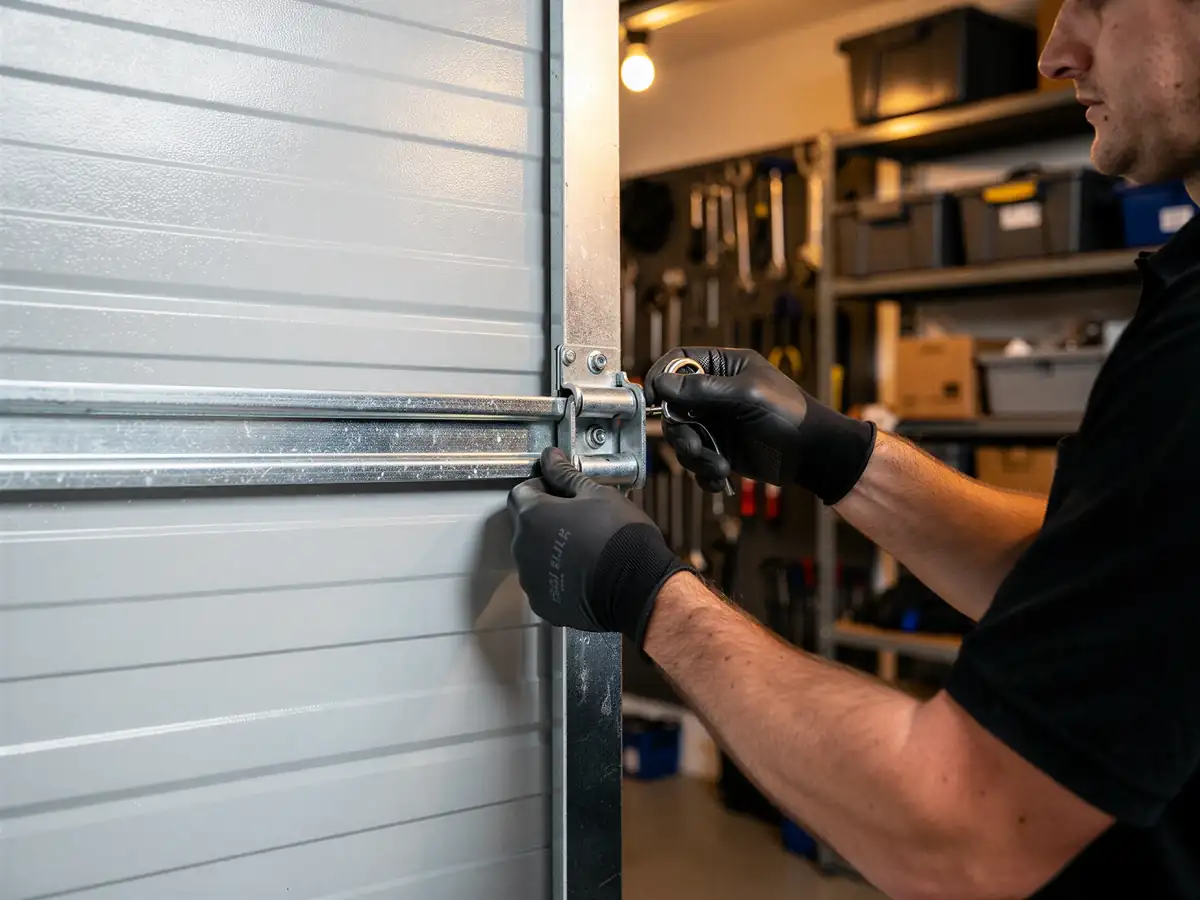
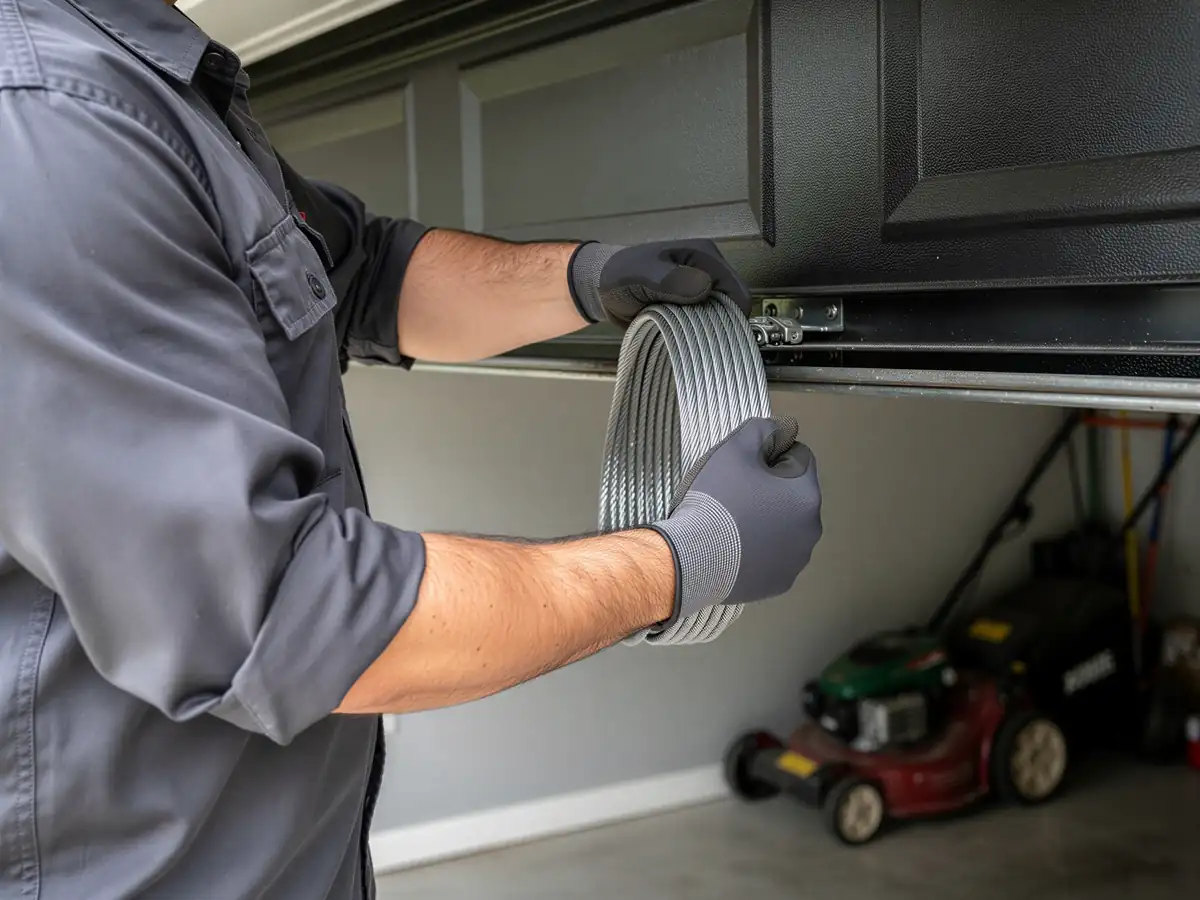
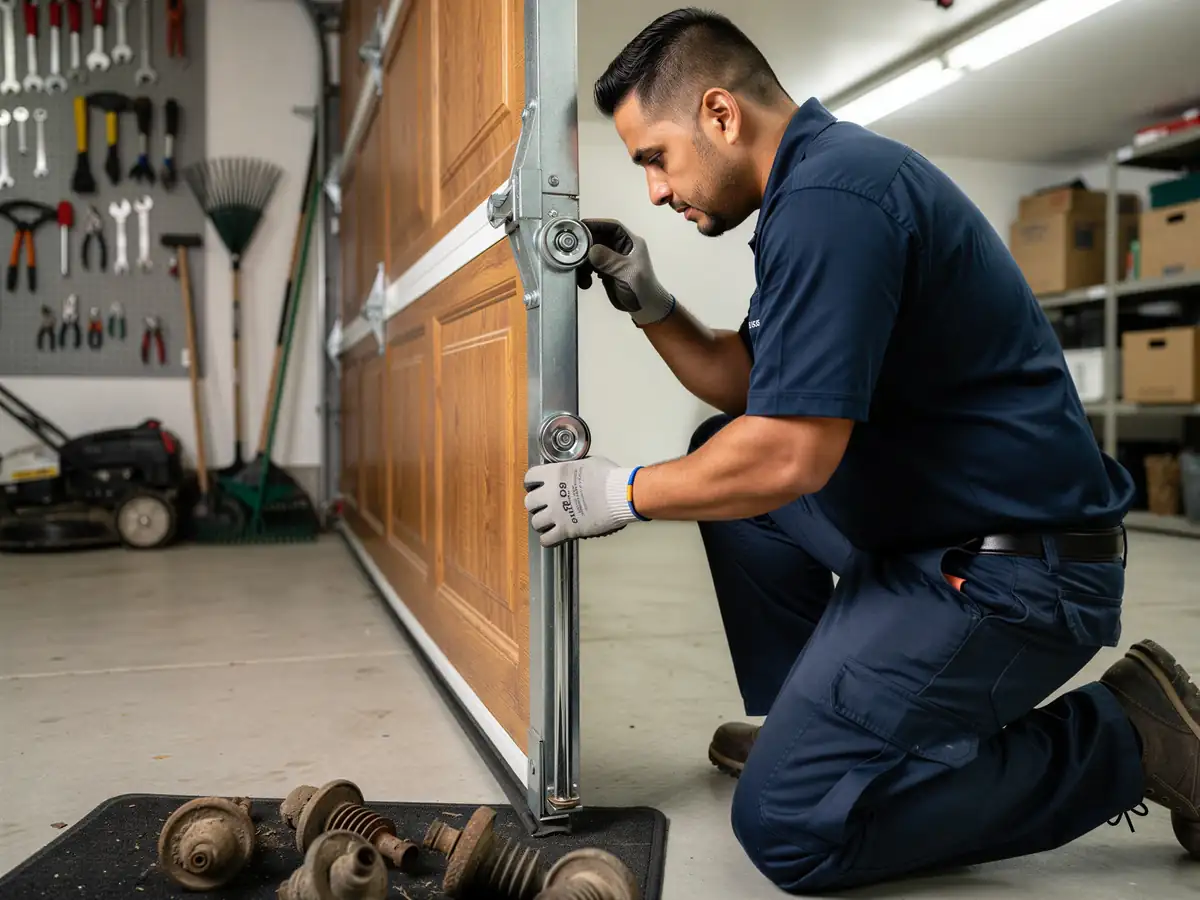
A grinding sound on the way up almost always means a roller that's worn flat or a track that's bent slightly out of line - common once a door's original hardware passes the 30-year mark, which a lot of 1960s and 70s-era Irvine doors are now well past. A sharp pop followed by the door refusing to move is a cable or spring letting go; that one isn't a maintenance item, it's a stop-using-it-now item.
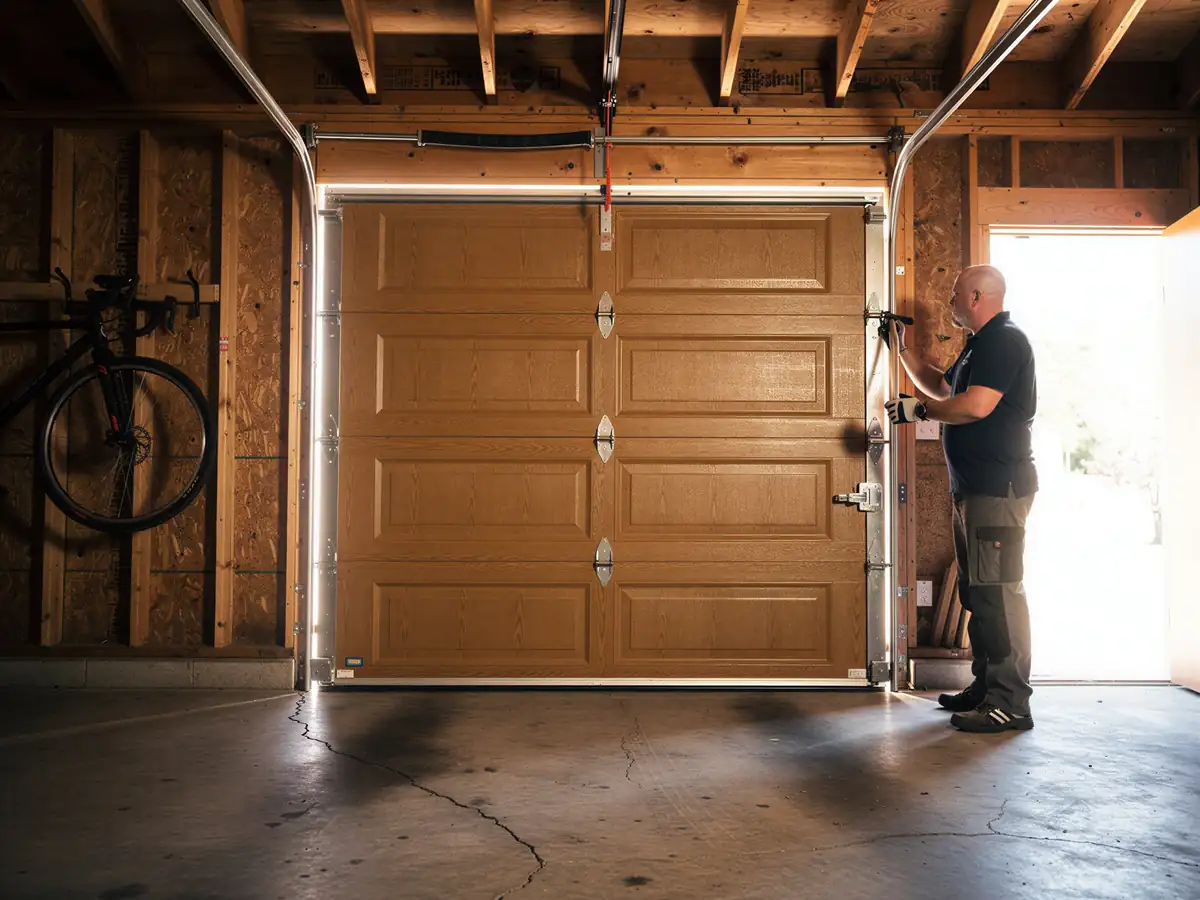
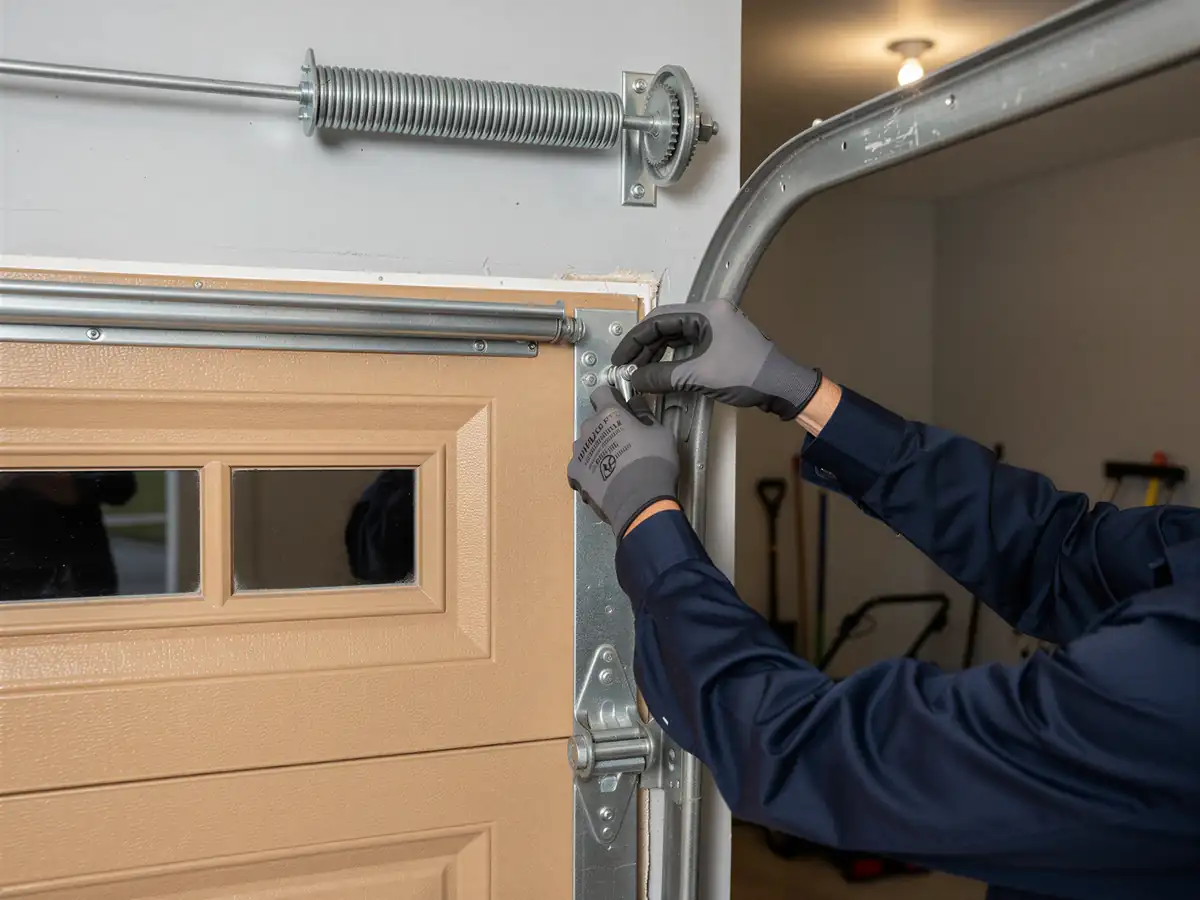
A rhythmic slapping or banging as the door travels usually points to a bent panel or a hinge working loose, both of which show up more often on original one-piece and sectional doors from the older end of the housing stock than on anything installed in the last decade. A low hum with no movement is almost always the opener's motor straining against something mechanical downstream - a track, a spring, a roller - rather than the opener itself being the problem.
The honest limitation here: we can tell you what a sound usually means over the phone, but we won't guess at a fix sight unseen. Springs, cables, and bent track all look different up close than they sound from the driveway, and guessing wrong on a spring job is how people get hurt.
Season by Season
Irvine sits in a mild temperate band without the hard freeze-thaw cycles that wreck hardware elsewhere
So you won't hear the same winter-specific complaints as colder climates - no ice-cracked panels, no frozen tracks. What you do get is steady, low-grade wear that never gets interrupted by a season that forces a repair. A loose roller in March is still a loose roller in November; nothing resets it.
That said, the stretch of warmer months tends to be when people notice noise the most
Simply because garage doors get opened and closed more often - more weekend projects, more trips in and out. A sound that was faint in January becomes obvious by August, not because anything dramatic happened to the hardware, but because frequency exposes wear faster than it causes it.
Across the 29 named areas in this part of Orange County
This pattern holds pretty consistently given the shared climate. The exception is houses that back up to more exposed, sun-heavy lots, where daily heat cycling on a metal door can loosen panel screws over time faster than a shaded garage would.
What the Weather Here Does to It
Without harsh winters, Irvine's garage doors don't suffer the freeze-related failures that generate a lot of generic maintenance advice online - warped wood from moisture, cracked seals from ice, springs that snap from cold contraction. None of that applies here in any meaningful way under this climate band.
What mild, dry weather does instead is let small mechanical problems run their full course undisturbed. A dry climate means less rust on springs and cables than you'd see in a humid region, but it also means lubricant dries out faster and nobody notices because there's no obvious weather event forcing the issue. The result is gradual, not sudden: a roller that should have been replaced two years ago just keeps grinding a little louder every month until it finally seizes.
So the sounds worth paying attention to here aren't storm-damage sounds - they're age sounds. A door built when the house went up in the 60s or 70s, never having had hardware swapped out, is the one most likely to start talking to you. Listen for the grind, not the bang.