The Common Mistake
Most homeowners assume their opener will just work when the power drops, because that's how it's always worked. The trouble is that a lot of what's installed across Irvine's 29 named areas dates back to housing built mostly in the 1960s and 70s. That's long before battery backup was a standard feature on garage door openers. People move in, the opener still runs the door, and nobody thinks about what happens the moment the circuit goes dark.
The second mistake is not knowing where the manual release cord is, or assuming it'll be obvious in the dark with one hand on a flashlight. In a home with the original opener bracket from decades back, that cord might be stiff, the release mechanism might be painted over, or a prior owner may have rigged something that isn't quite to spec. None of that shows up until the power actually cuts and the door won't budge.
With a median household income of $124,167 across this service area, a battery backup unit is not a stretch purchase for most Irvine households. The real barrier is just not knowing the existing opener doesn't have one, or not knowing that's even something you should check.
The Problem
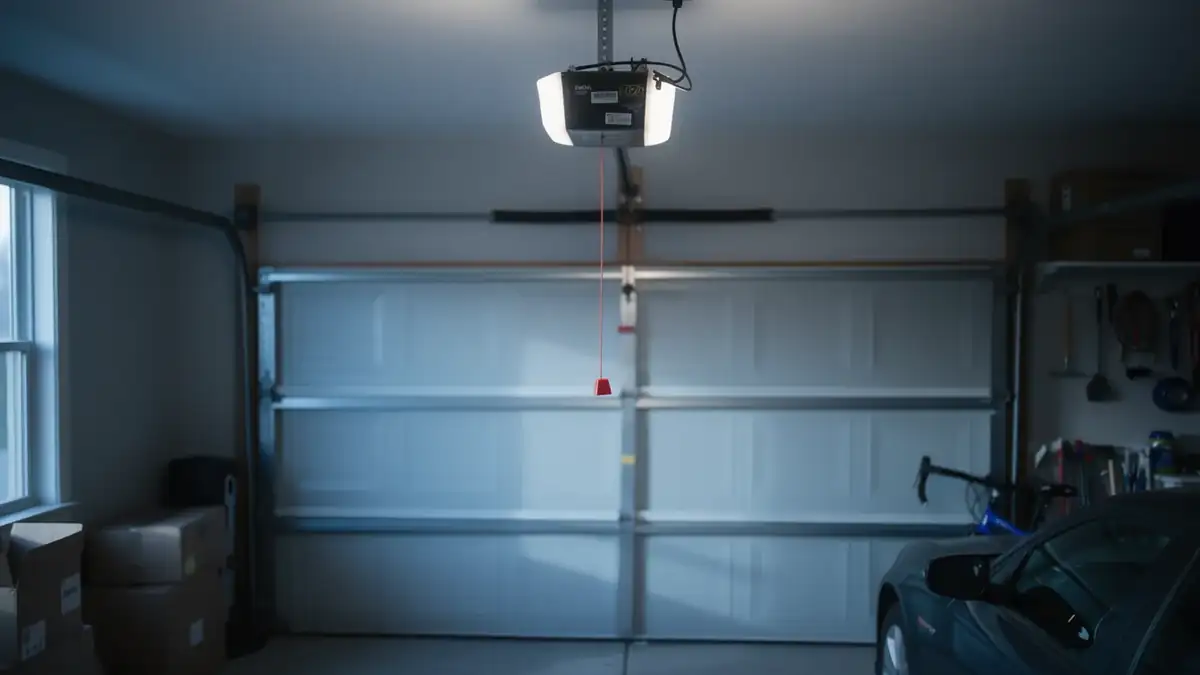
When the opener loses power, the door itself is fine. The spring, the track, the panels - none of that cares about electricity. What fails is the mechanism that lifts and lowers it, and in homes where the opener was installed or last replaced decades ago, there's often no backup battery sitting in the unit to pick up the slack.
Across the 316,088 households in this service area, a lot of garage doors still rely on openers installed before battery backup was common equipment. That means when the power cuts, the car stays in the garage until either the power comes back or someone finds the manual release and lifts the door by hand - which, on a heavier double door, is not a one-person job.
The other half of the problem is that nobody tests this until it's a real outage. A release cord that's never been pulled can be harder to find than expected, especially bolted into a ceiling-mounted unit from a 1976-era build that's seen a few coats of garage paint since. We don't carry every opener model or part on the truck, since some of the oldest units are no longer made - at that point replacement is usually the honest answer, not a repair.
Season by Season
Irvine sits in a mild temperate band
So the door and opener aren't fighting the freeze-thaw swings that crack springs or seize tracks in colder parts of the country. That's one thing you don't have to worry about here. But mild doesn't mean exempt - utility power cuts happen for reasons that have nothing to do with temperature, and an opener without backup doesn't care why the grid dropped.
Through the warmer months, demand on the grid tends to climb
And that's often when utilities schedule maintenance cuts or when load shedding becomes more likely. A battery backup unit doesn't know or care what season it is; it just keeps the door working when the wall outlet doesn't.
In the cooler months, the mild climate here means less stress on the hardware itself
So most calls we get aren't weather-driven at all - they're age-driven. A 40-year-old opener bracket doesn't fail because of a cold front. It fails because it's 40 years old. That's worth knowing before you spend money chasing a weather explanation that isn't the real cause.
- 40 years
What the Weather Here Does to It
Because the climate here is mild, the springs, cables, and tracks on an Irvine garage door generally aren't dealing with the expansion and contraction that wrecks hardware in places with real winters or humid summers. That's a genuine advantage, and it means a door here can run longer on its original springs than the same door would somewhere with harsher swings.
What the mild climate does not do is protect the opener's electronics or wiring from age. Neighborhoods like carry some of the oldest opener installs in the service area, dating back toward that 1976 median build year for Irvine housing. The motor windings, the logic board, the backup circuit if there even is one - those parts age the same whether the house is in a mild climate or not.
So the honest read is this: weather here is doing you a favor on the mechanical side of the door, but it's not buying you anything on the opener side. If your unit predates battery backup, that's an electrical and age problem, not a climate one, and it won't fix itself just because the forecast stays calm.