Serving Irvine, CA & nearby
(949) 288-3992
Irvine, CA

What Actually Happens When We Come Out for a Service Call

A straight look at what a garage door service call includes in Irvine, where 1960s-70s stock sits next to newer villages and mild weather hides slow wear until a spring or cable lets go.

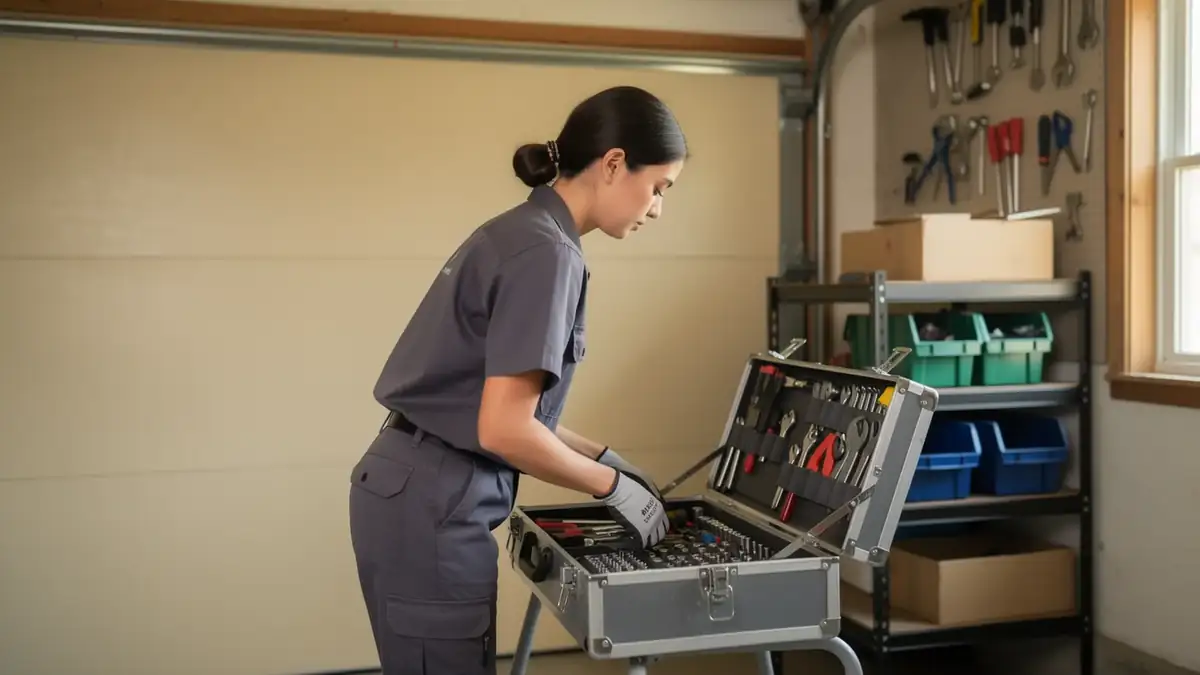
A technician in a gray uniform is looking into an open toolbox in a garage.

The Common Mistake

Most calls start the same way: a door that's been groaning for months, and nobody looked twice because the weather here never forces the issue. In a lot of climates, a stiff door gets diagnosed fast because cold snaps and heavy rain make problems obvious. Irvine doesn't do that to you. With a mild temperate climate and no hard freeze-thaw cycle, a worn roller or a dry hinge just keeps working, badly, for years. Owners assume quiet, slow failure means the door is fine. It usually means the opener's motor is doing the work that a bearing or spring used to share. The mistake isn't ignoring the door - it's reading no drama as no problem. A service call exists to catch what mild weather lets slide, not what a storm forces into the open. That's why we check torsion spring wind, cable fray at the drum, and track alignment on every visit, even on doors nobody has complained about. Those three things fail quietly and expensively if you wait for a loud symptom.

The Problem

Irvine's housing runs from 1938 to 2015, with the median build year around 1976, and most of the stock in the 29 named villages dates to the 1960s and 70s. That spread means a service call on a door is a different job than one in Great Park or Oak Creek. Older doors often carry original hardware that's been re-painted and re-adjusted for decades but never actually replaced - galvanized torsion springs rated for a cycle count that's long since passed, extension springs without containment cables, openers with worn gear sets. Newer builds east toward Great Park and Oak Creek have modern steel doors and belt-drive openers, but those come with their own issue: plastic idler pulleys and sensor brackets that crack from UV exposure over time, not cold. A real service call has to account for which era of door is in front of us before touching anything, because the fix for a 1970s torsion setup and a 2010s rolling-code opener share almost nothing.

Season by Season

With a mild temperate climate, Irvine doesn't get the seasonal swings that force maintenance on a calendar. There's no freeze that stiffens lubricant, no deep thaw that swells wood jambs. What that means in practice is that wear is driven by use and age, not by weather events, so a once-a-year service call matters more here, not less, because nothing external reminds you to book one. Spring and fall don't bring the obvious cues - no ice-jammed track, no storm-warped panel - so the door just keeps cycling on the same hardware until something gives out mid-use. We see the same pattern across the villages: doors that look fine on the outside and have springs or cables past their safe cycle count. A service call in a market like this is less about reacting to a season and more about checking what a season elsewhere would have already exposed.

What the Weather Here Does to It

Mild temperate conditions are easy on a garage door compared to places with real freeze or monsoon humidity, and that's worth saying plainly - this isn't a climate that cracks panels or rusts springs on a schedule. But easy isn't the same as nothing. Consistent moderate heat and UV exposure, without a cold season to interrupt it, dries out lubricant on tracks and hinges faster than owners expect, and it's the slow kind of dry that doesn't squeak until the roller's already grinding metal on metal. Plastic components - sensor brackets, pulley wheels on belt-drive openers common in newer Irvine builds - get brittle from sustained sun rather than cold-snap contraction. One honest limit: if a spring has already failed and the door is down, we can usually get out same-day for the spring itself, but a full hardware replacement on an original 1970s torsion system sometimes needs parts we don't carry on the truck, which means a short wait on that piece, not the whole repair.
How it works

From “it’s stuck” to “it’s fixed”

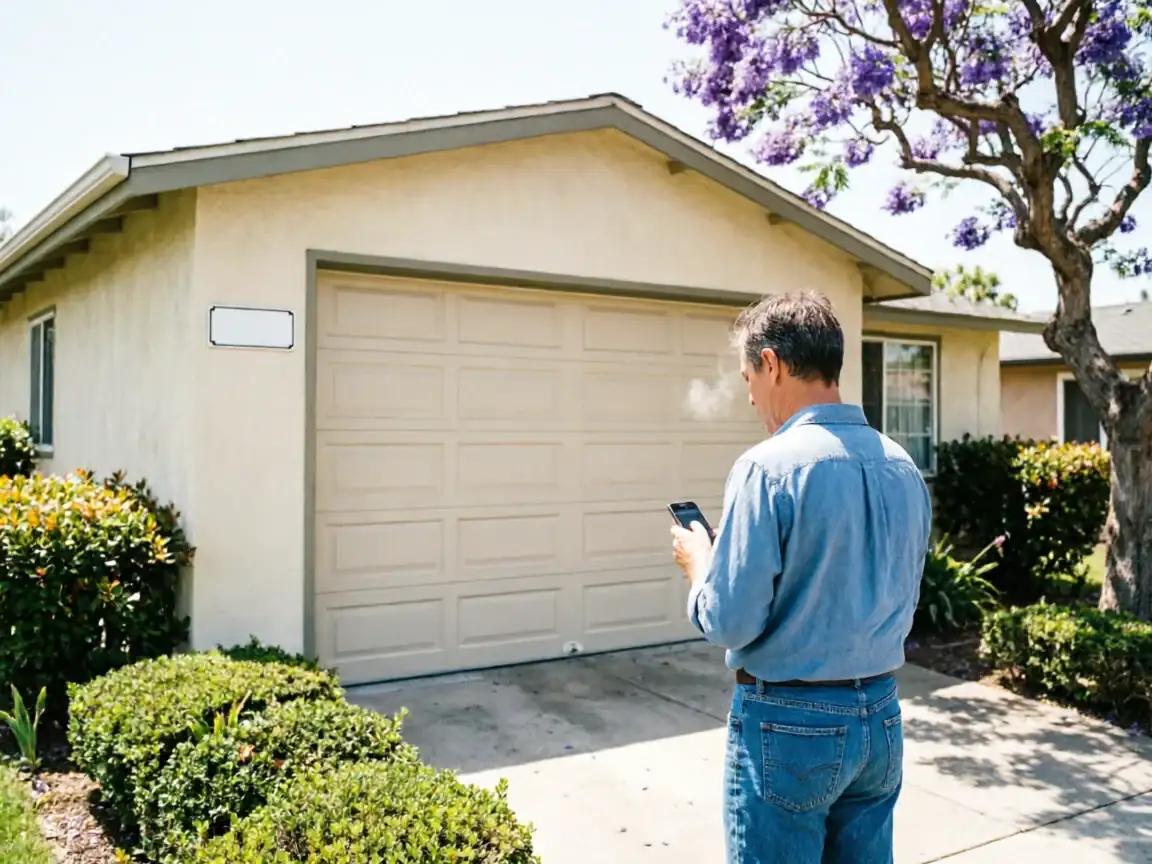
A man stands in a driveway, looking at his phone in front of a closed garage door.

Tell us what’s wrong

Describe the symptom - won’t open, loud bang, opener runs but the door won’t move.

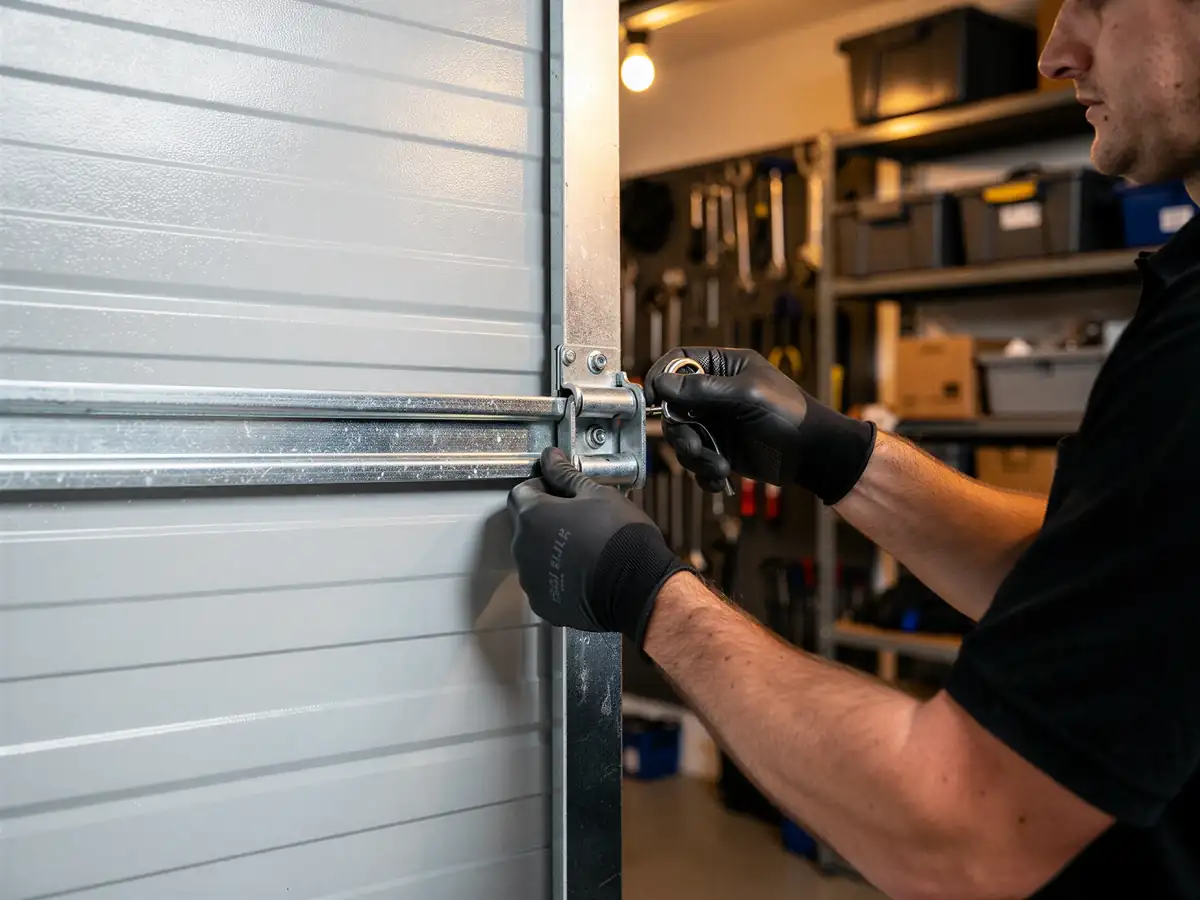
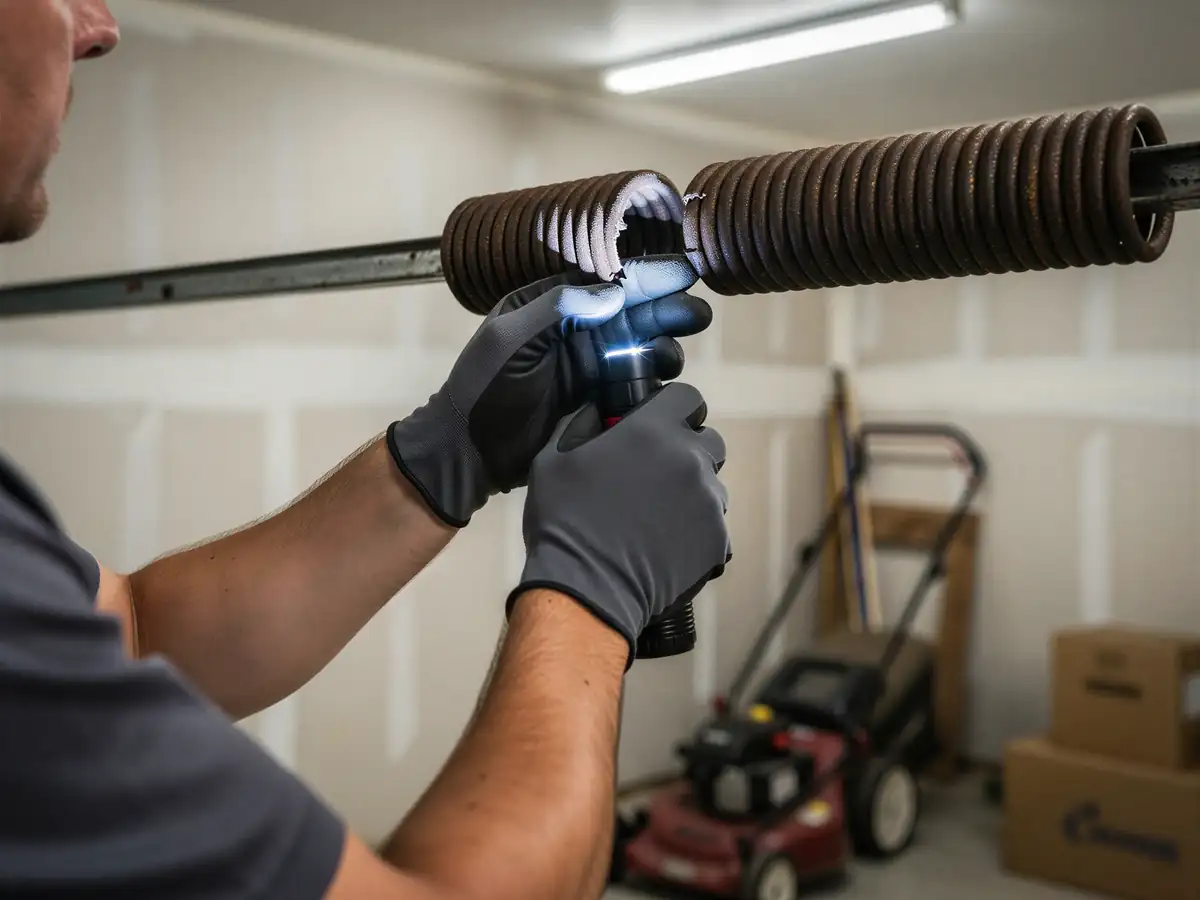
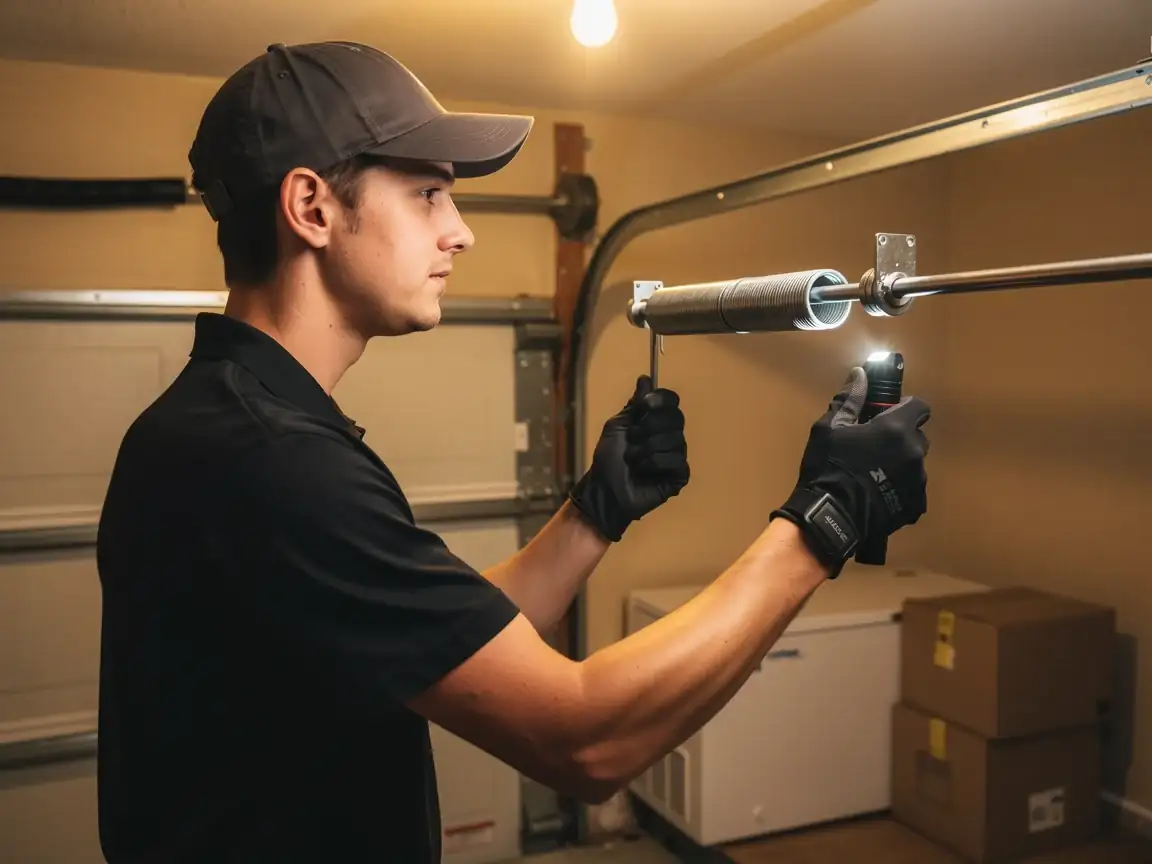
A technician in a gray hat and black gloves inspects a garage door torsion spring.

On-site diagnosis

A technician tests the door under power and by hand and finds what actually failed.

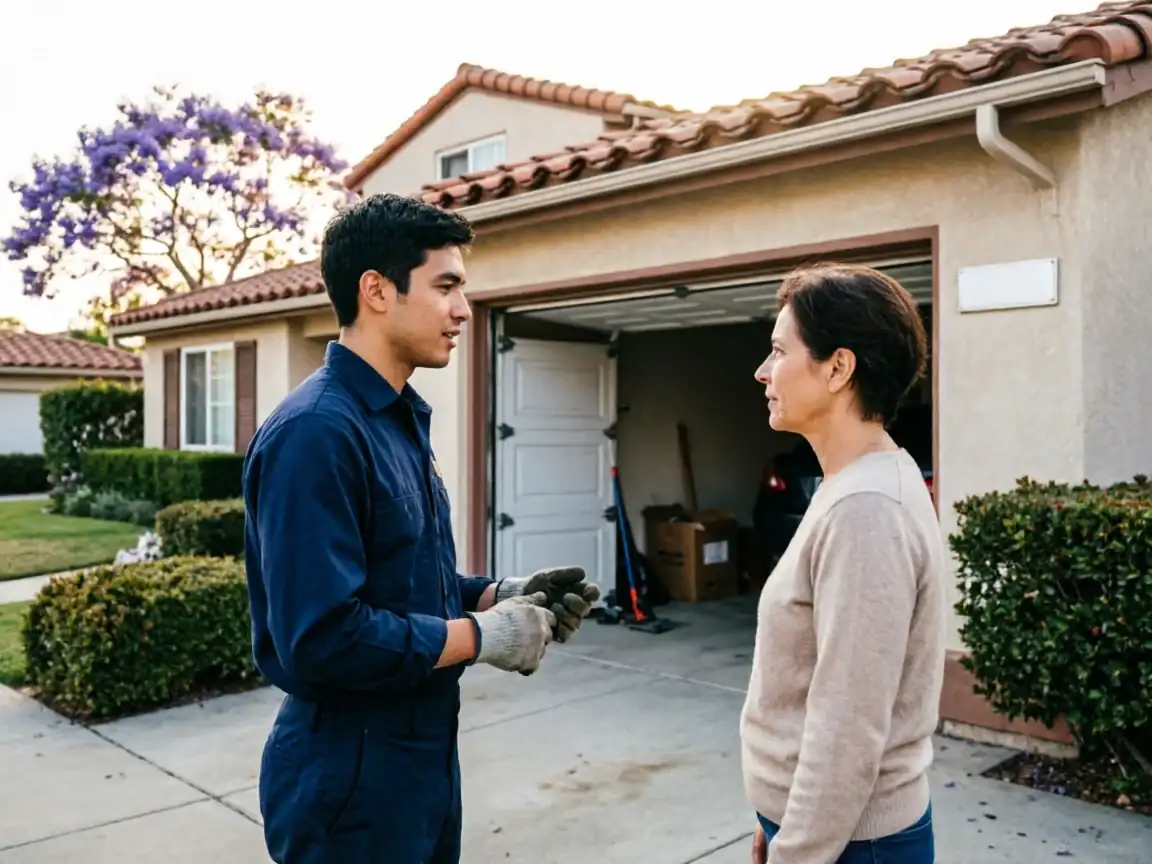
A technician in a blue uniform talks to a woman in front of a house.

Clear, up-front plan

You get the fix that’s needed and what drives the cost - before any work starts.

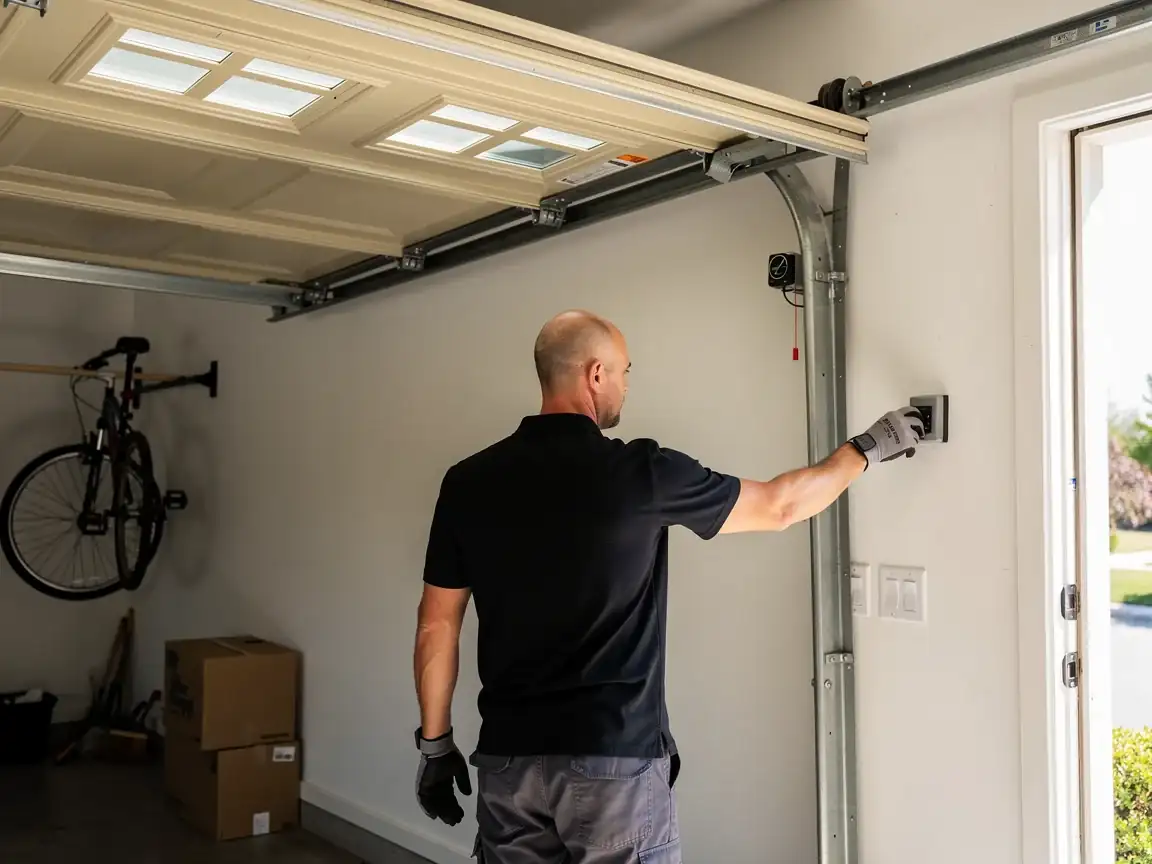
A technician in gloves presses a button on a garage wall.

Repaired & tested

The repair is done, the door is set true and tested, and the work area left clean.

Not sure which repair your door needs in Irvine, CA? Describe what it’s doing - every job starts with a diagnosis.

How we work

What to expect

Diagnosis firstEvery visit starts by finding what actually failed - not a pre-written parts list.
The right part for the doorSprings and openers matched to the door’s weight and age, so the fix holds up.
Straight answersWhen a repair makes more sense than a replacement - or the reverse - you hear it plainly.
Clean, careful workTension released safely, hardware set true, the door tested under power before we leave.
Questions

Frequently asked

Straight answers about garage door repair in Irvine. Still unsure? Ask us directly.

Why does my door need service if nothing's broken?

Irvine's mild climate doesn't force problems into the open the way freeze-thaw or heavy storms do elsewhere. A spring or cable can wear down for years without a dramatic symptom. A service call checks spring wind, cable condition, and track alignment before one of those fails mid-cycle, which is a cheaper fix than a dropped door.

Does the age of my house change what a service call looks like?

Yes. Irvine housing spans 1938 to 2015 with a median around 1976, and most of the 29 named villages carry 1960s-70s stock. Older homes often still run original torsion hardware that needs different checks than the newer belt-drive openers common in areas like Great Park or Oak Creek.

Do you always carry the parts for an older torsion system?

Not always. Original hardware from the 1960s-70s era sometimes uses spring sizes or drum configurations we don't stock on the truck. We can usually handle an urgent spring failure same-day, but matching an original setup exactly can mean a short parts wait.

Ready to get your garage door sorted?

Tell us what it’s doing and where you are in Irvine - we’ll take it from there.

8Services offered
7Areas covered
Diagnosisfirst, then the fix
Request a QuoteCall