The Common Mistake
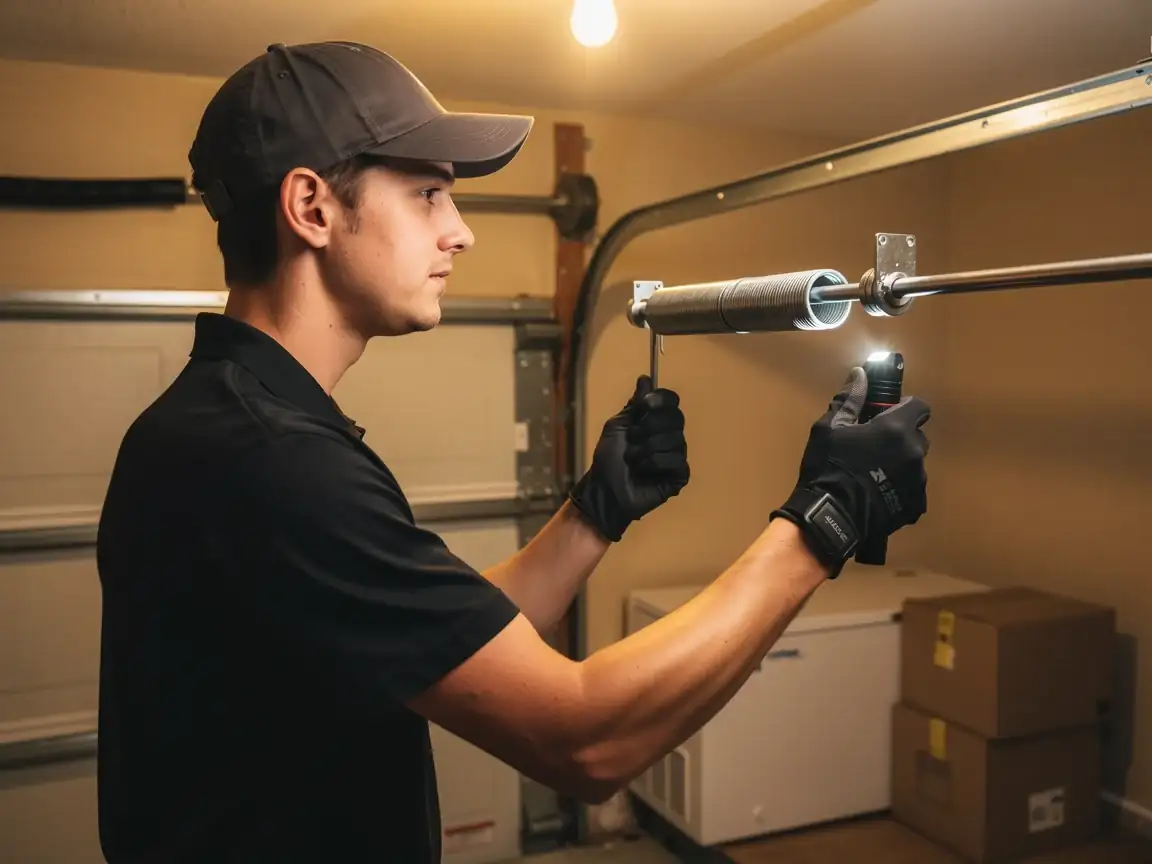
People hear "Irvine" and picture new construction, so they assume an aging garage door here is rare and probably not worth the trouble to fix. That's backwards. Housing across the area spans 1938 to 2015, but a lot of it clusters in the 1960s and 70s, and plenty of villages built in that window are now pushing fifty years on their original door hardware. The mistake isn't optimism about new houses - it's assuming an older door in an older village must be a lost cause, so owners either replace the whole unit when the spring is the only dead part, or they keep limping along on a door that genuinely needs retiring. Both come from skipping the actual inspection. A torsion spring, a bent track, and a tired opener motor are three different problems with three different price points, and you can't tell which one you have by guessing at the house's age. The door itself, the springs, the opener, and the track all wear on separate clocks. Before you decide to replace or repair, somebody needs to look at which of those four is actually failing, because the answer changes the job completely.
The Problem
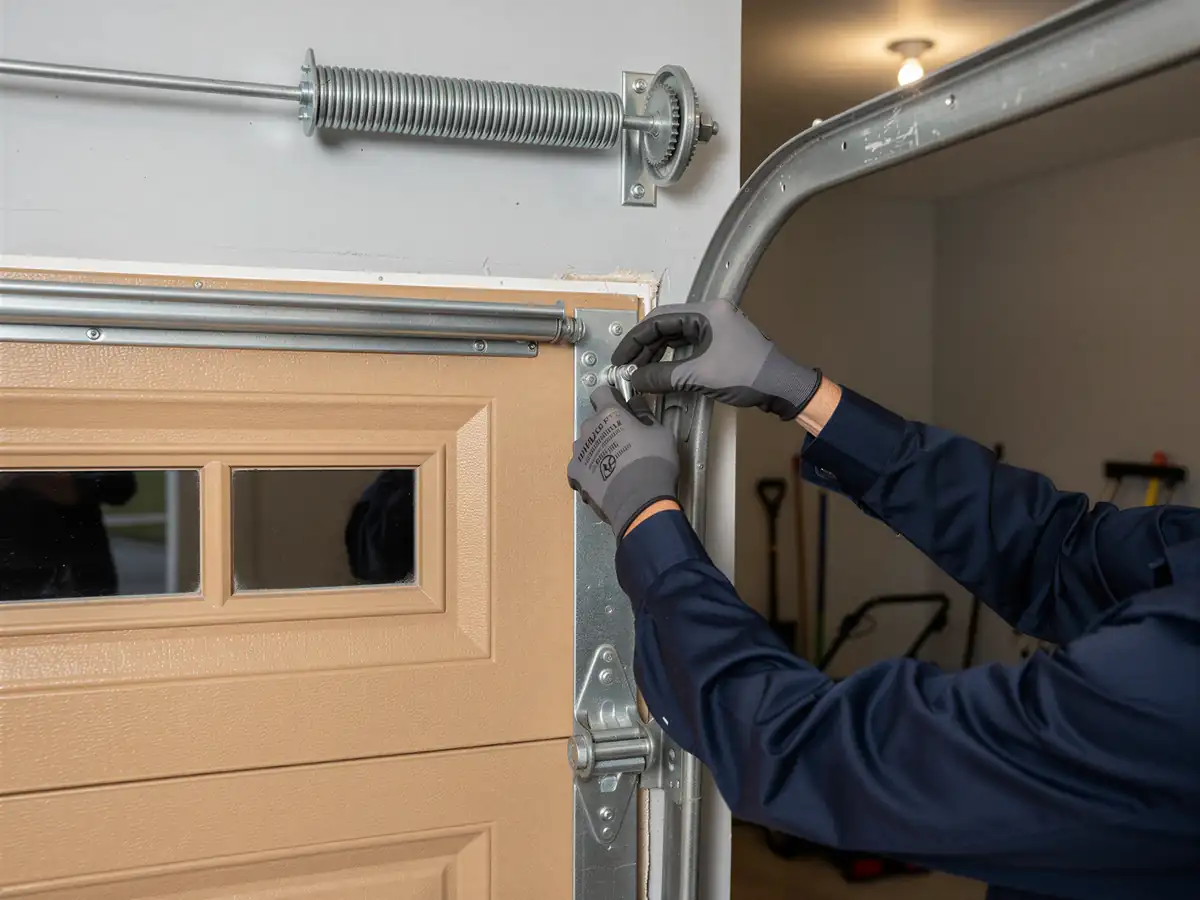
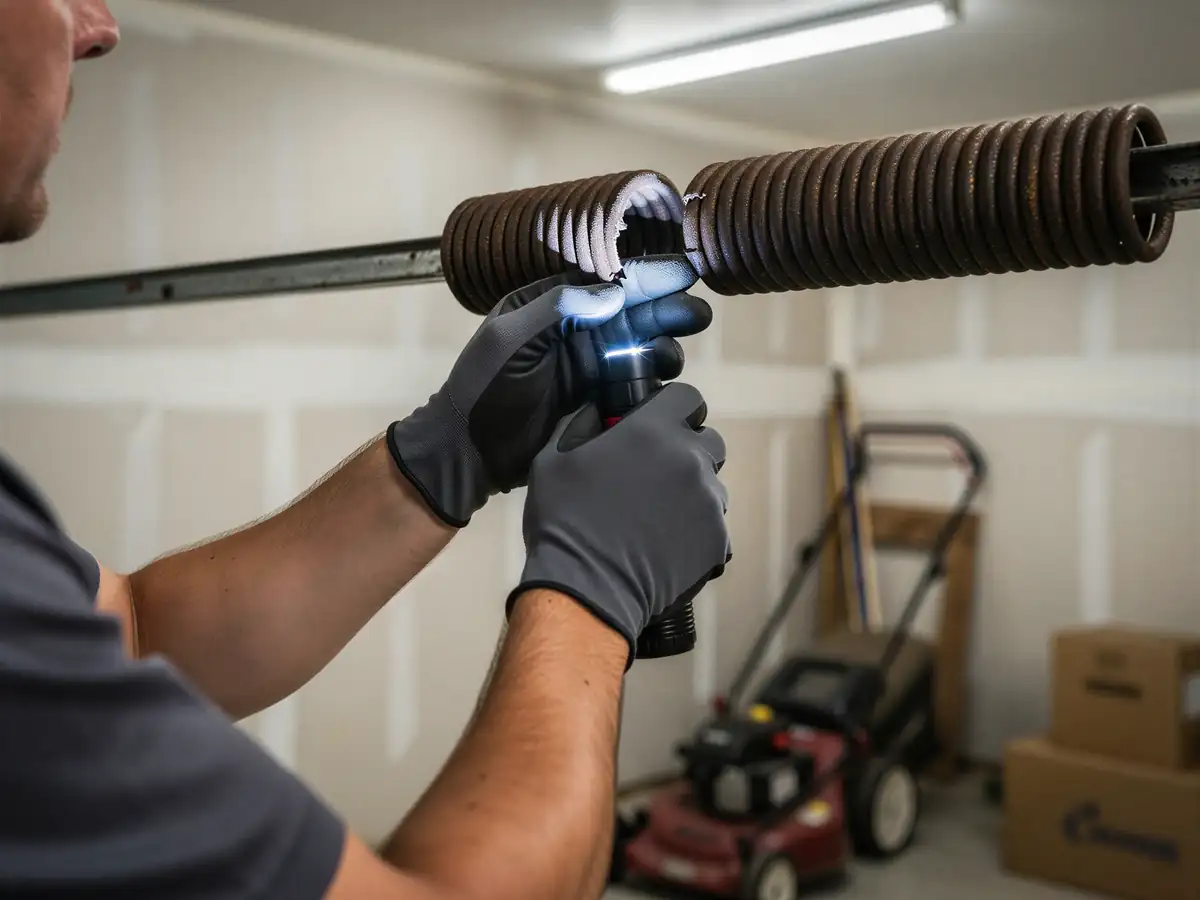
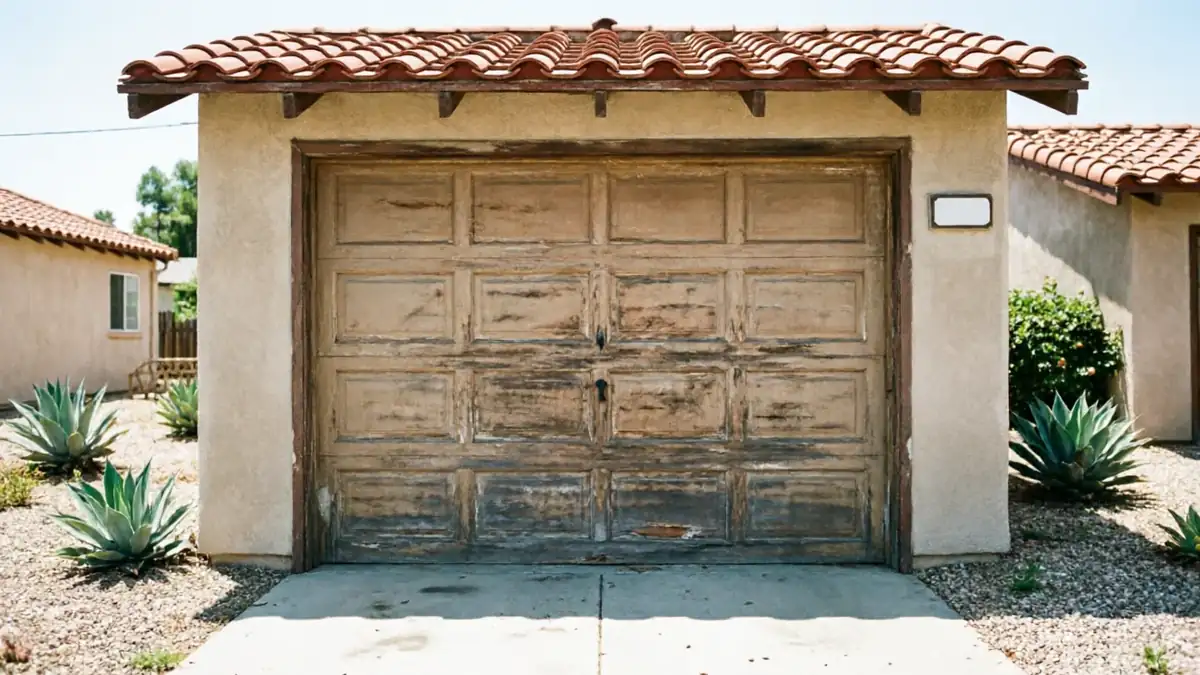
Doors installed when a lot of Irvine's villages were built - that 1960s-70s wave that makes up much of the housing stock - were built to a different standard than what goes in today. Extension springs instead of torsion, no safety cables over them, steel panels that have been rusting quietly along the bottom edge for decades. None of that means the door is junk. Steel sections often outlast their original hardware by a long way, and a sound panel set on bad springs is a spring job, not a door job. The real issue shows up when the track has been reset so many times it's bent out of true, or when the bottom panel has rusted through from years of sitting against a damp slab - at that point you're not fixing a part, you're compensating for a structural one, and that's where repair stops being the honest answer. We won't try to rebuild a panel that's rusted through just to avoid a replacement conversation. On a door from that era, the panels and the opener are usually fine; it's the spring system and the safety hardware that have aged out, and that's a different, smaller job than most owners expect when they call.
What the Weather Here Does to It
Because the climate stays mild, weather damage isn't the thing killing older doors in Irvine - cycle count is. A door built when a house went up in, say, the 1970s hasn't been fighting humidity swings or ice; it's just been opening and closing a few thousand more times than a newer one, and springs are rated in cycles, not years. That's good news for repair decisions: if the panels are sound and the rust is only surface-level, the door's structure has likely held up fine and the failure is almost always the spring, the opener, or the track hardware wearing out from use. It also means we can't point to storm damage or freeze cracking as the reason a door needs replacing, because that's not what's happening here. If a door's failing, it's failing from age and use, which is exactly the kind of failure that's often fixable rather than a reason to tear the whole thing out. The limitation worth naming plainly: once a track is bent from repeated resets or a panel has rusted through at the bottom, no amount of mild weather changes that those parts are done and need replacing, not patching.