Booking a Visit
We run this job from Irvine, 18 miles out, so a Buena Park call isn't a drive-by add-on to a route - it's a trip we schedule into the day on purpose. That means we don't have a branch or a drop-in counter in Buena Park, and we won't pretend otherwise. What we do have is a crew that knows what's waiting behind most of these doors before the truck leaves the lot, because the housing stock here is consistent enough to plan for.
When you call, tell us the door's age if you know it and whether it's ever been replaced - original hardware versus a retrofit changes what we load before we drive. Buena Park's 24,199 households are a small slice of the roughly 316,088 across the territory we cover out of Irvine, which is part of why we ask these questions up front instead of guessing on-site. Booking ahead, even by a few hours, usually gets the right parts on the truck the first time.
See scheduling for Buena Park for current availability.
What Causes It Around Here
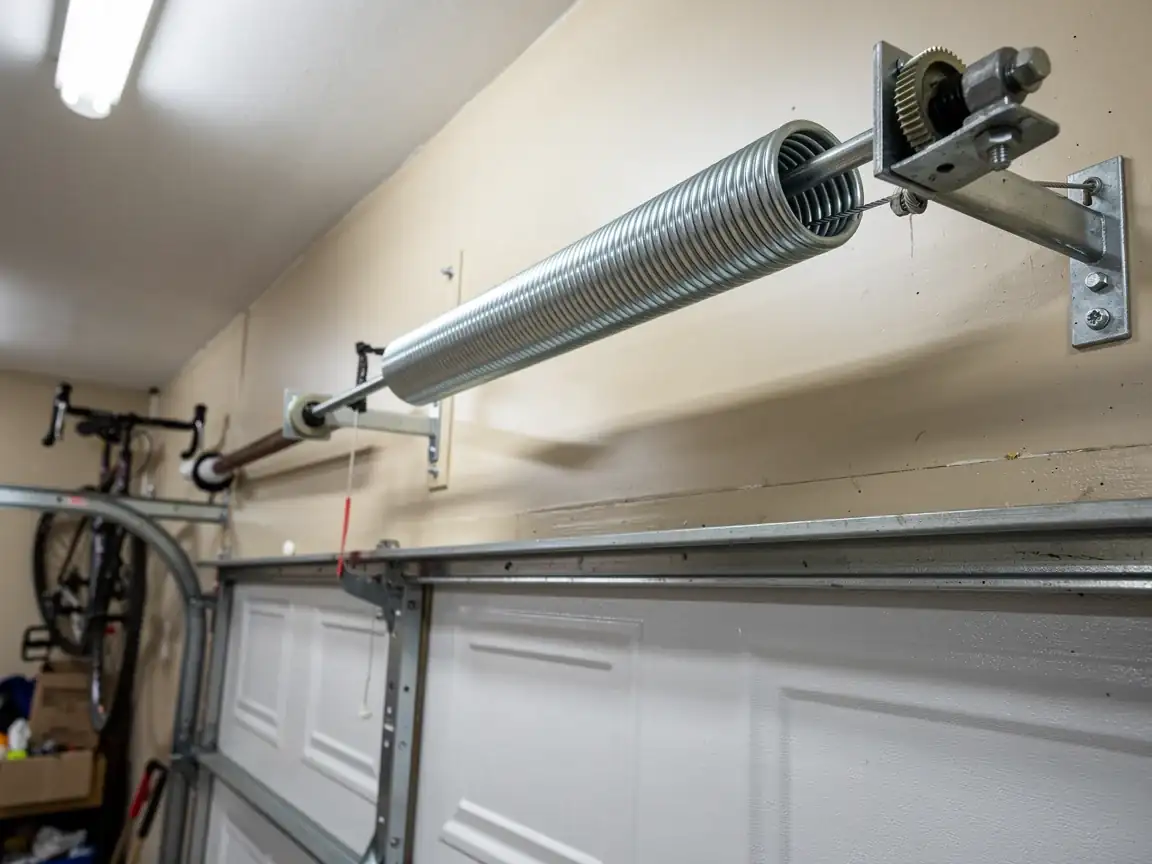
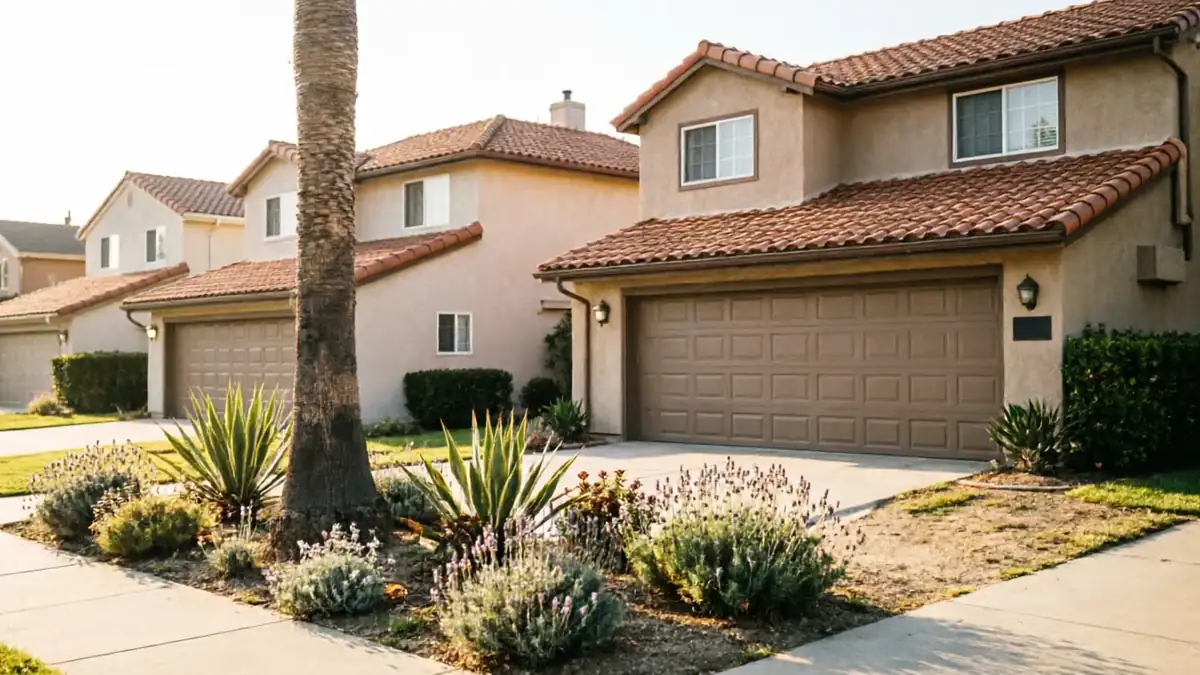
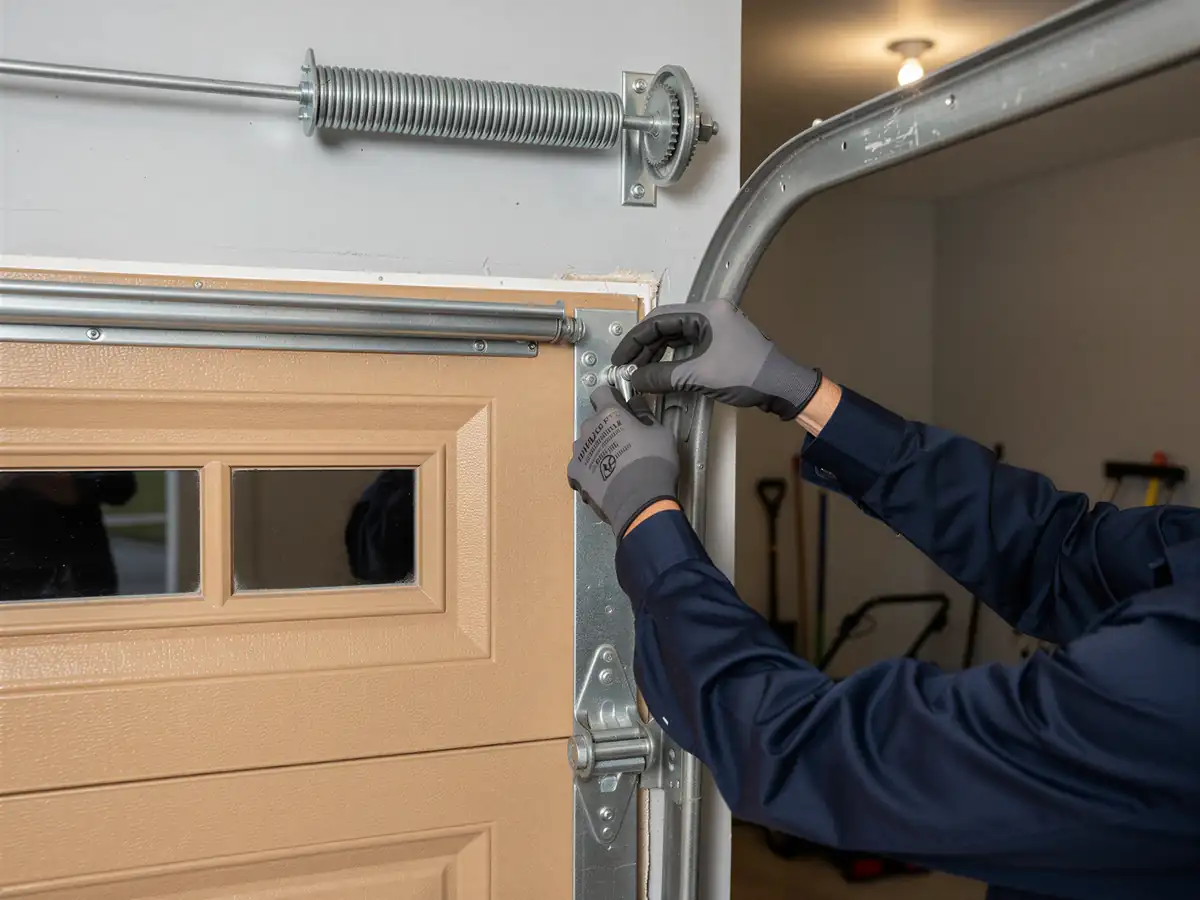
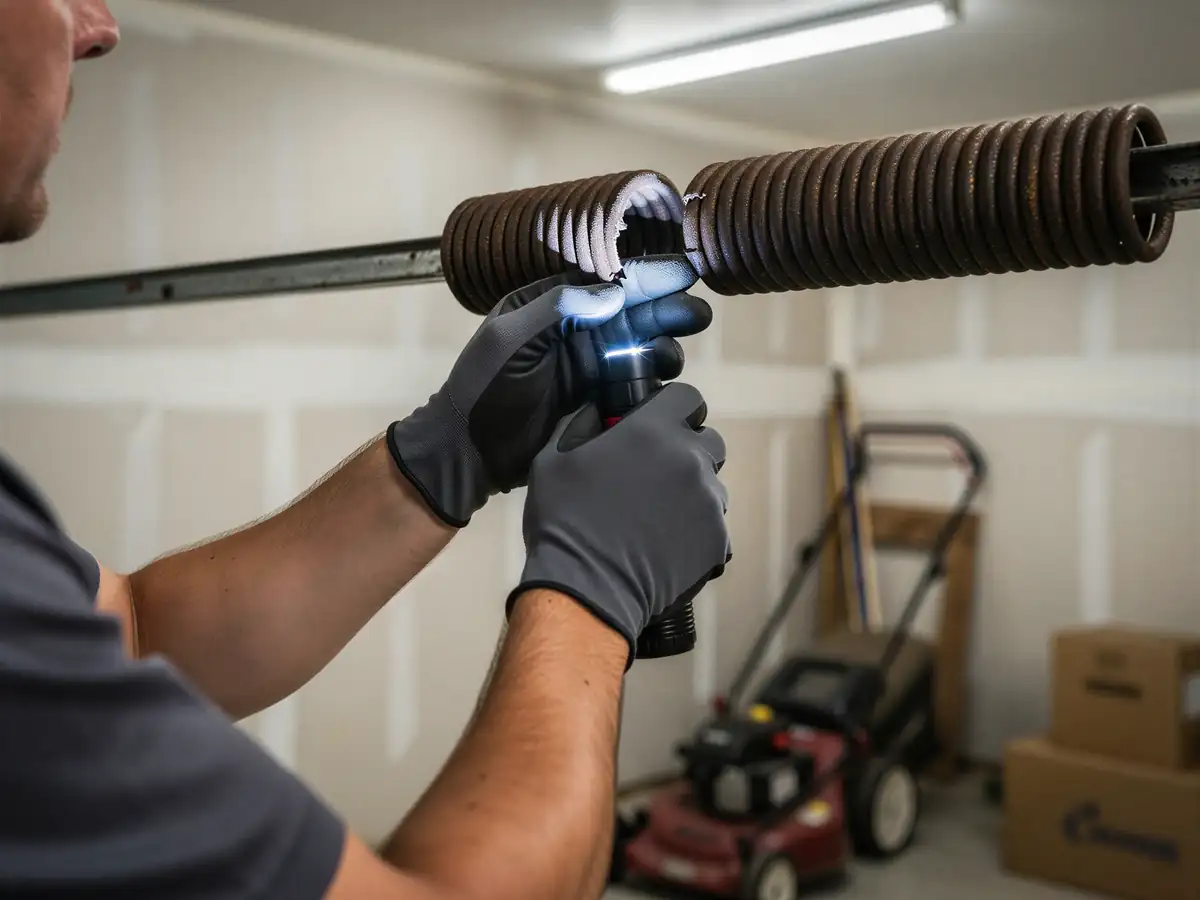
The fault we see most in Buena Park traces straight back to when these houses went up. The median build year here is around 1966, a decade older than the roughly 1976 median across the wider service area, which means a larger share of original steel sectional doors still running on extension springs mounted along the horizontal track instead of the torsion springs that became standard in newer construction.
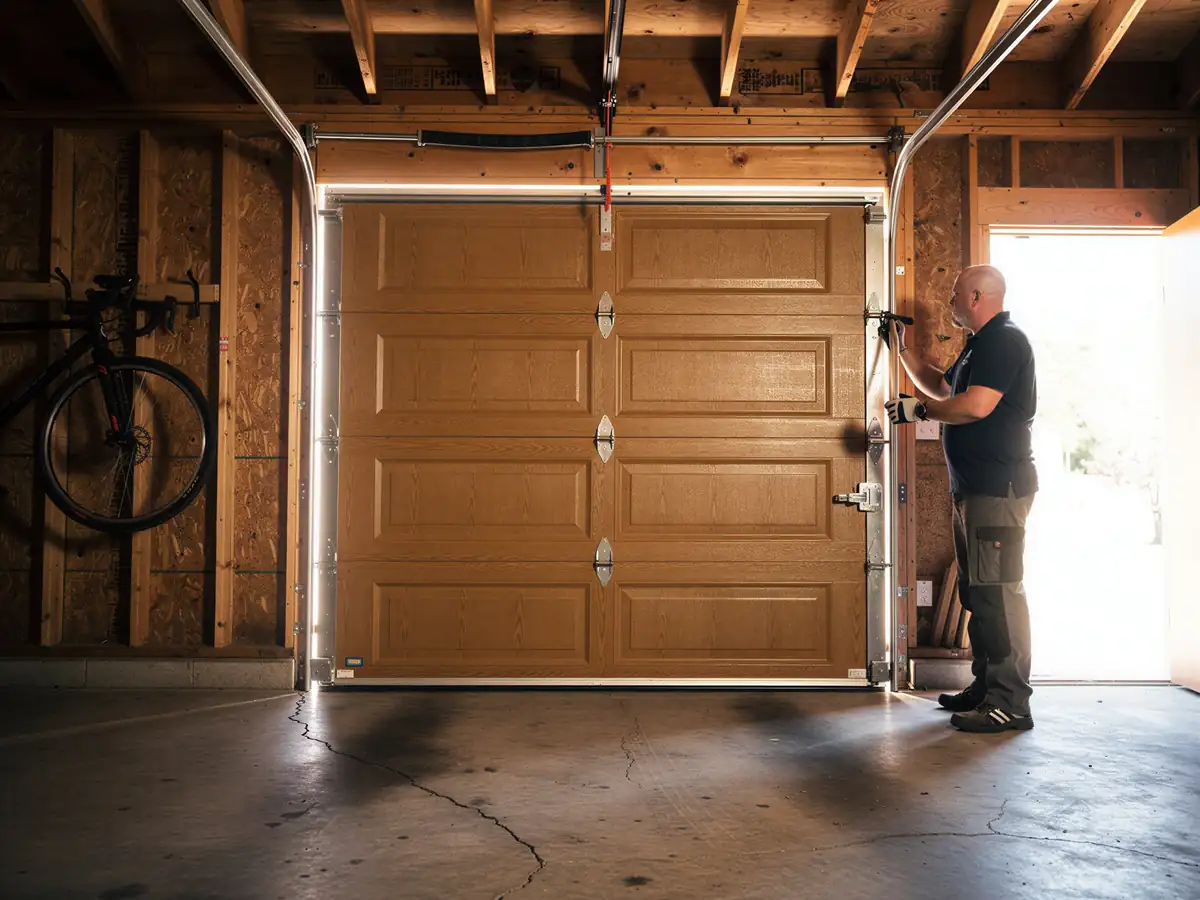
Extension springs stretch and sag over decades of cycling. On a door that's original to a 1966 build, that's close to sixty years of lift cycles on hardware that was never designed to last that long without a swap. The safety cables that are supposed to contain a snapped extension spring are also often missing or added as an afterthought on these older setups, which is a bigger deal than it sounds.
The mild temperate climate here doesn't drive the kind of extreme temperature swings that crack panels or warp tracks, so when a door in this area fails, it's almost always the spring, the cable, or age-worn rollers - not weather damage.
What Can Go Wrong
On a 1966-era door still running extension springs
The most common failure is a snapped spring with no safety cable to catch it - the spring lets go and the door drops or jams halfway, sometimes with the cable whipping loose. We also see worn pulleys and frayed lift cables on these older setups, since both parts were built to a 1960s standard of durability, not a modern one.
Openers are the other weak point
A house built in 1966 wasn't built with an opener at all - most were added decades later, and we regularly find openers from different eras bolted onto original door hardware that was never matched to it. That mismatch shows up as grinding, stalling, or a door that reverses for no clear reason.
We don't carry every vintage extension-spring part on the truck for every call
Some of the oldest pulley and drum combinations are no longer made, and in those cases replacement is faster and safer than hunting down an exact match.
What You Are Seeing
If your door is sagging unevenly on one side and the opener strains before it moves, that's usually one extension spring doing the work of two. If the door drops suddenly partway down and won't lift again, a spring has likely let go - step back from the track area, since a missing safety cable means the spring could still be under tension.
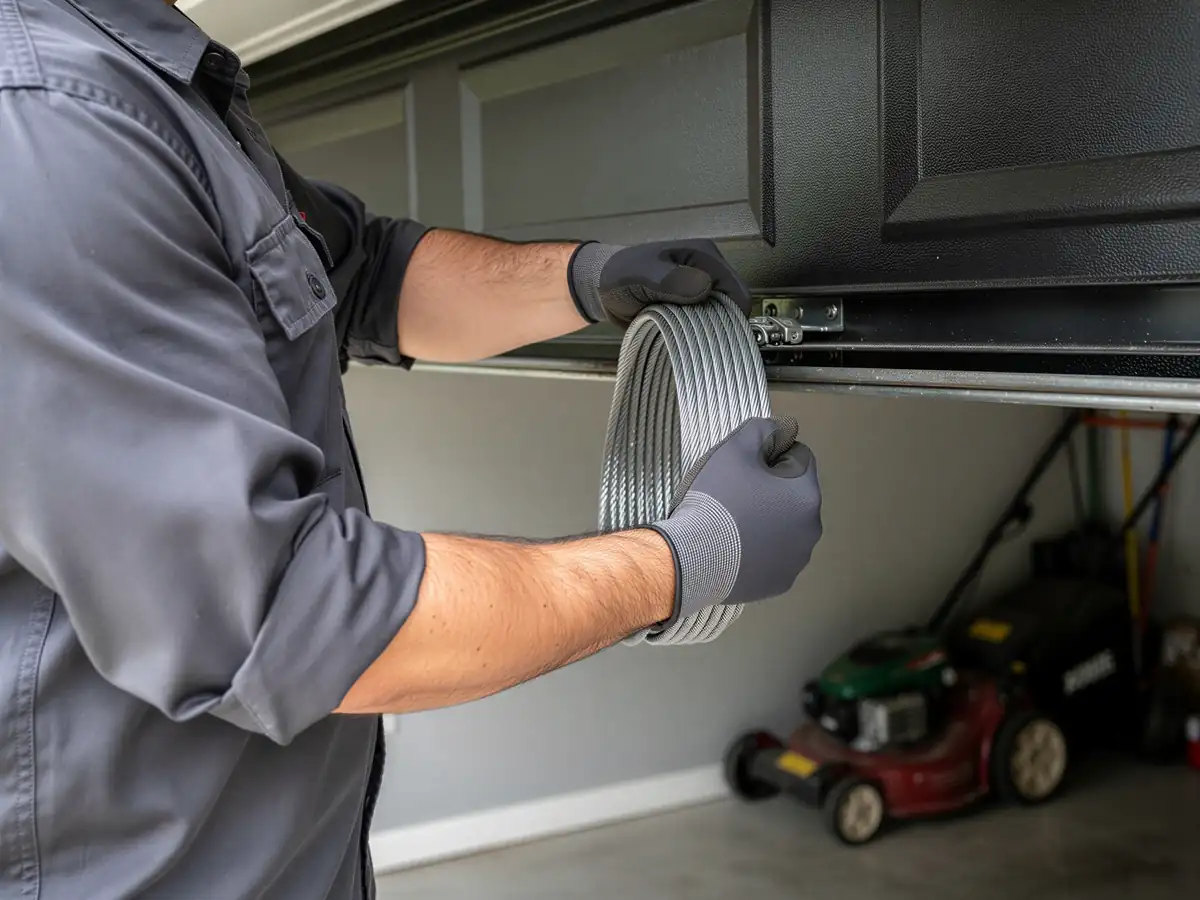
Frayed or kinked cable near the bottom corners of the door is worth catching before it snaps. On original 1966-era hardware, that cable has often never been replaced, and a full break tends to happen without warning.
A door that reverses itself halfway up, or an opener that runs but the door doesn't move, usually points to a drive gear or chain issue rather than the spring system - different fix, different part.
Can You Do This Yourself
Tightening a loose roller bracket or lubricating a track isn't dangerous and doesn't need a call. An extension spring under tension is a different matter - on hardware that's been in place since 1966, the metal is fatigued in ways you can't see from the outside, and a spring that lets go while you're working on it can cause real injury.
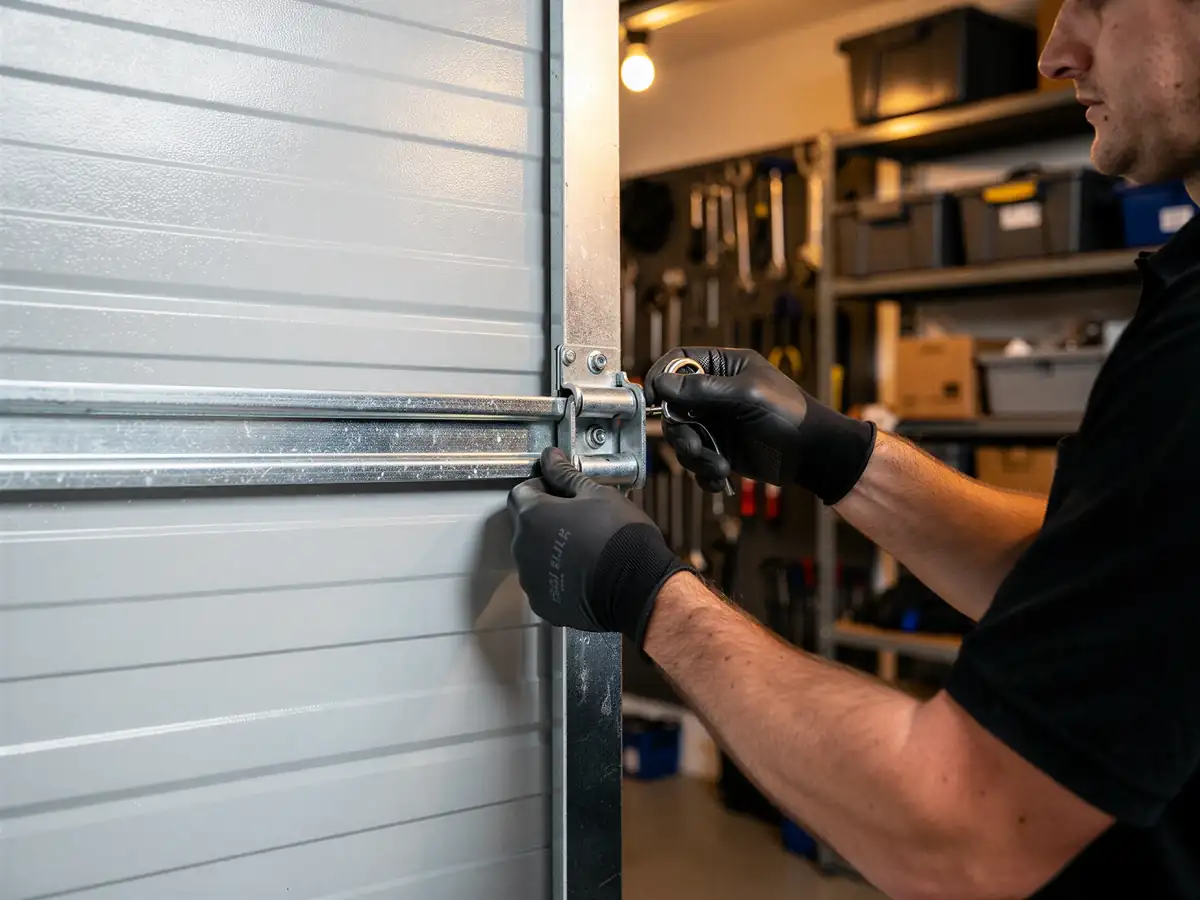
If you're comfortable with basic tools, replacing a worn pulley on a door that's otherwise sound is a reasonable DIY job. Replacing the spring system itself, or anything involving the torsion or extension assembly under load, is where we'd tell you to call instead. We'd rather talk you out of a job on the phone than have you get hurt doing it.