Booking a Visit
Buena Park sits 18 miles from our shop in Irvine, which changes how an emergency call here actually works compared to a town five minutes away. We don't keep a truck staged in Buena Park, and we won't pretend otherwise - every job starts with a drive up the freeway corridor, so when you call with a door stuck open or a spring that's let go, the first thing we talk about is timing, not just the fault. That drive means we ask more on the phone up front: what the door is doing, whether it's a torsion or extension spring setup, whether the opener still has power. The more you can tell us before the truck leaves Irvine, the less time gets spent diagnosing once we're standing in your driveway. If the job isn't a true emergency - a door that's merely noisy, or a remote that's acting up - the general service page is the better stop; book there and we'll schedule around the drive instead of treating it as urgent. See /buena-park/garage-door-service/ for that, or /emergency-garage-door-repair-irvine-ca if you want the fuller picture of how we run calls out from the shop.
What Causes It Around Here
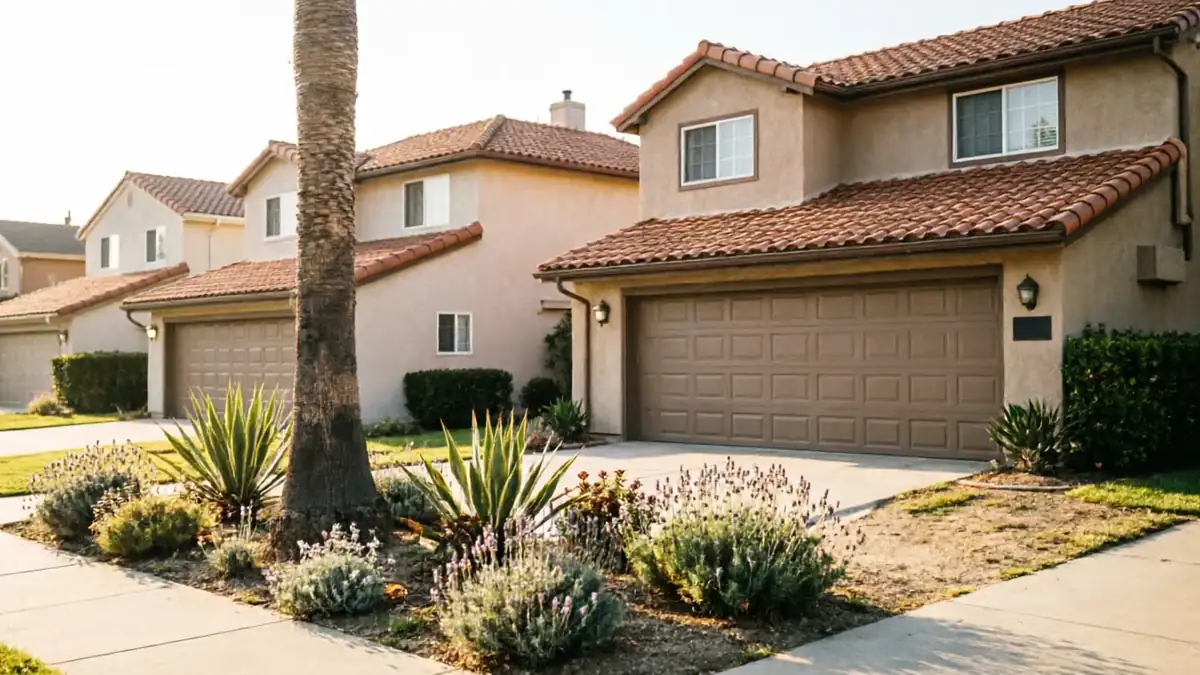
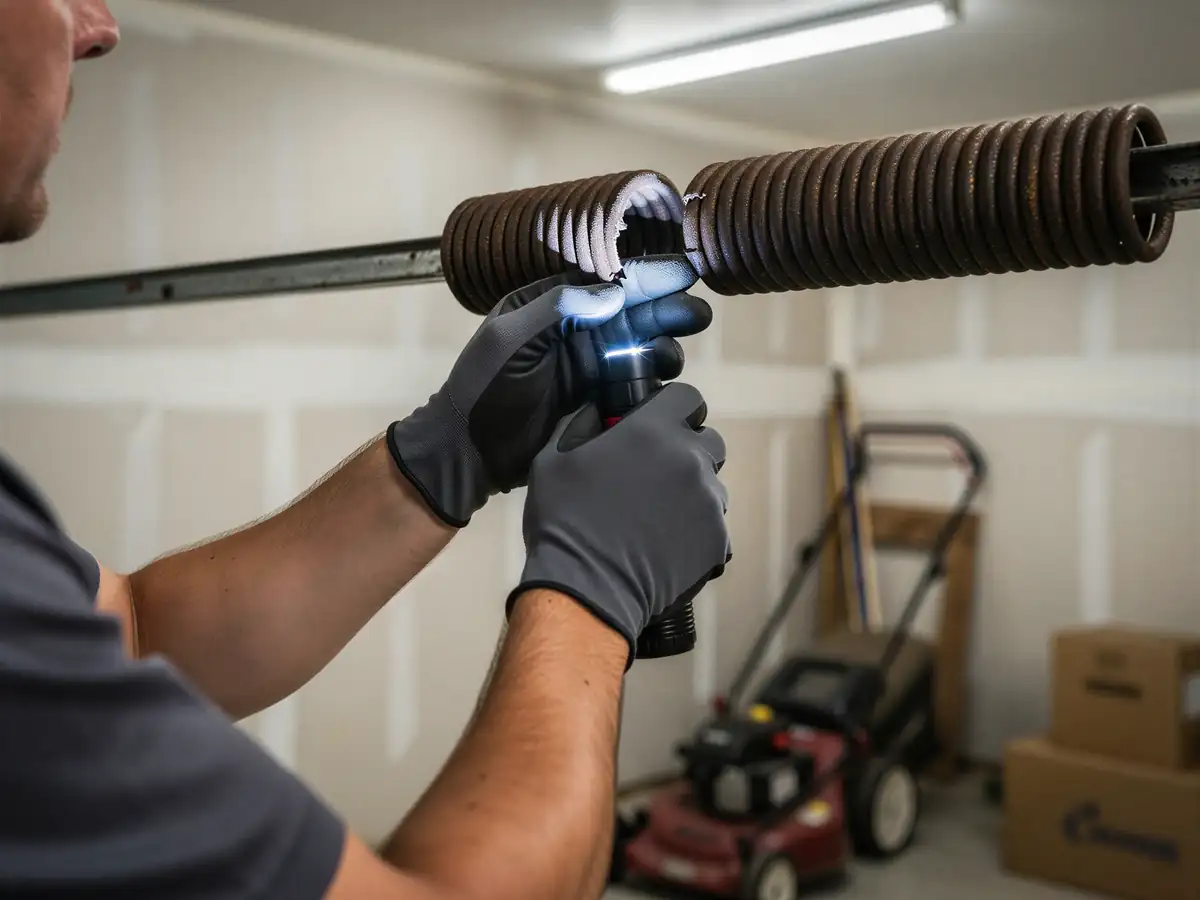
The median house in Buena Park went up around 1966, which puts most of the neighborhood squarely in the first wave of mass-produced steel sectional doors and the torsion hardware that came with that era. Thirty-plus years of California sun and the salt-tinged air drifting in from the coast have had time to work on galvanized springs and the original steel tracks on these houses. By now a lot of that hardware has outlived its rated cycle count without anyone touching it, which is exactly the setup that fails without warning - a cable frays through, a spring finally snaps, and the door won't move at all. The mild temperate climate out here doesn't throw the freeze-thaw cracking or monsoon swelling that wrecks doors elsewhere, so when something fails in a house this age, it's almost always wear catching up with original parts rather than weather damage from a single event. That's worth knowing before you start guessing at the cause.
What You Are Seeing
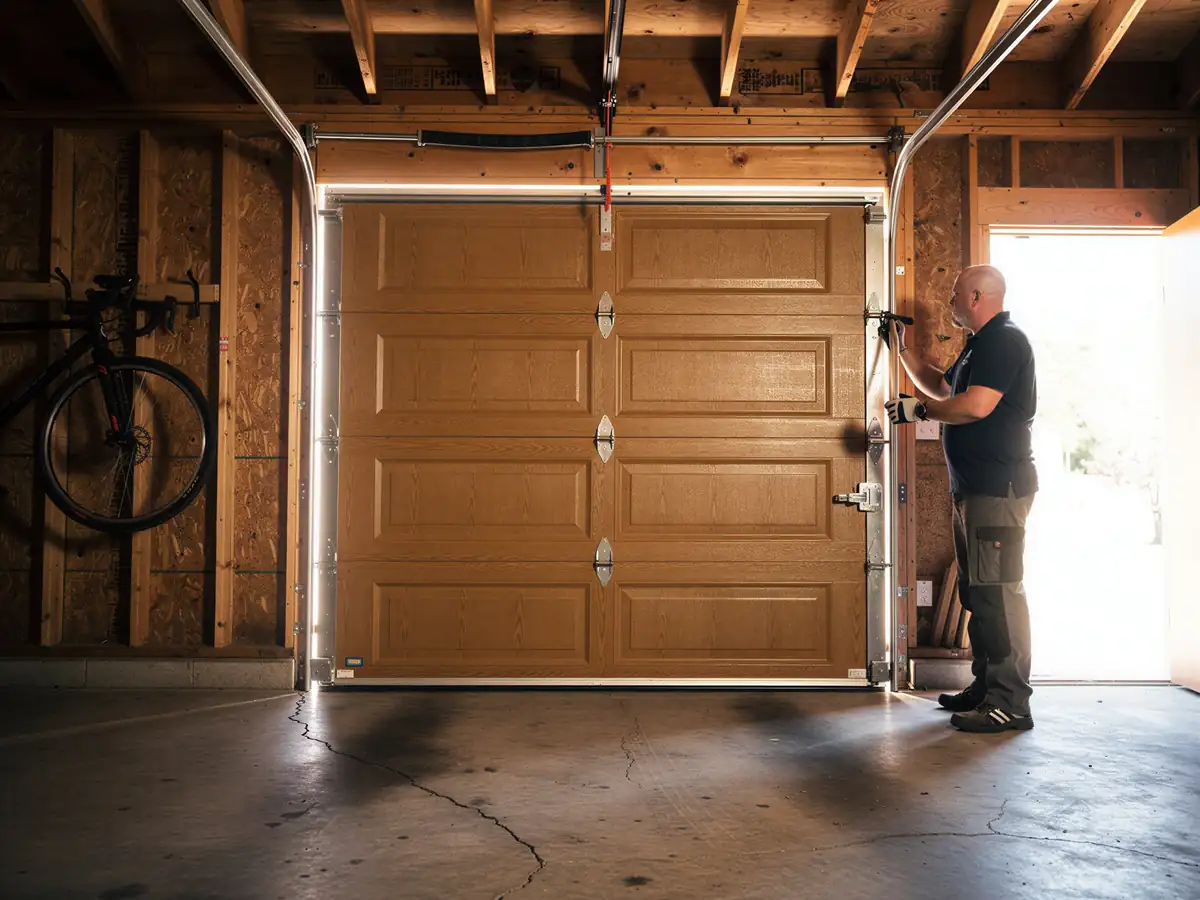
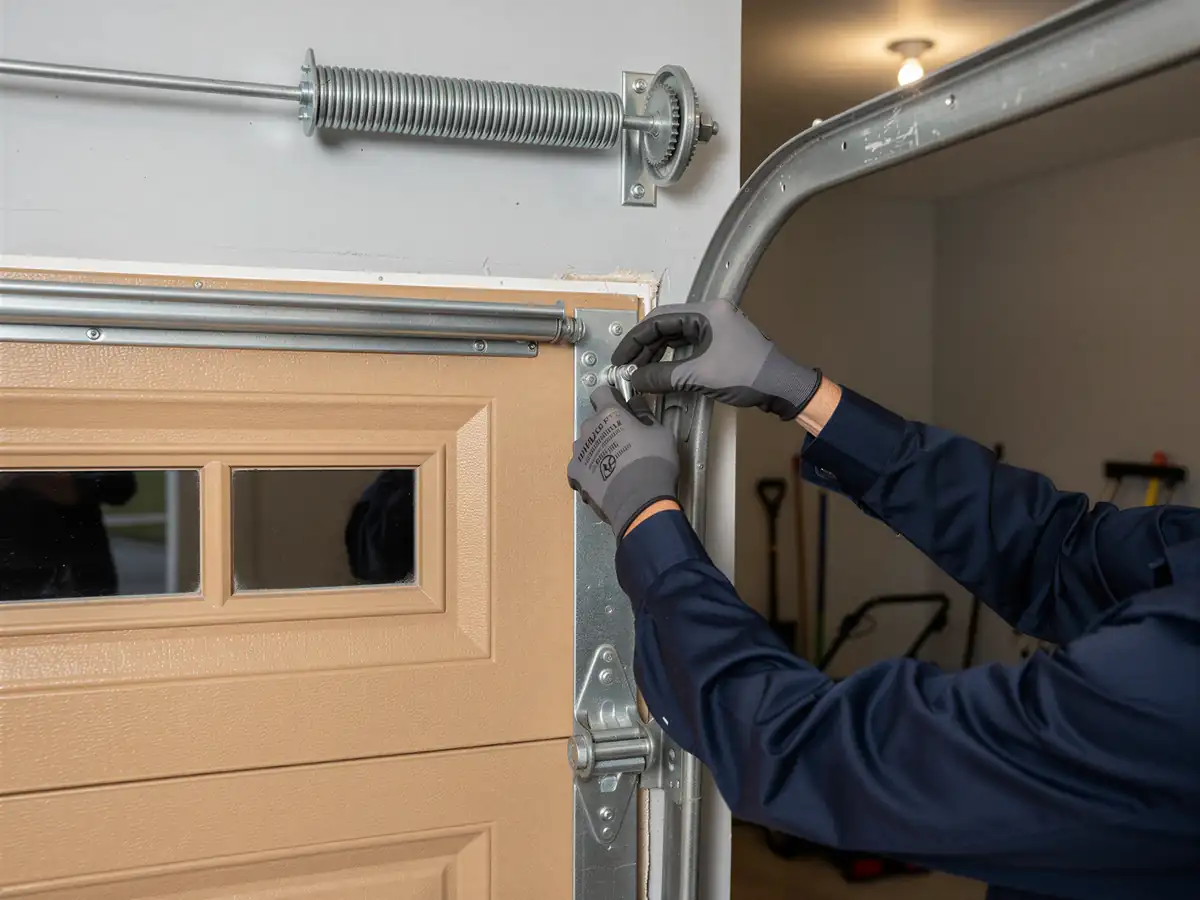
If the door stopped partway and won't go up or down on the opener, and manual pulling meets real resistance, treat that as a spring or cable failure, not an opener problem - the motor isn't built to lift a door's full weight alone. A door that slams the last foot instead of settling usually means the spring has lost tension gradually rather than snapped outright. Grinding or a loud bang followed by the door going dead-weight is almost always a spring letting go. A door that's visibly crooked, with one side higher than the other, points to a broken cable on the low side. None of these are things to force past - pulling a cord repeatedly against a seized track just adds a bent rail to the repair.
Can You Do This Yourself
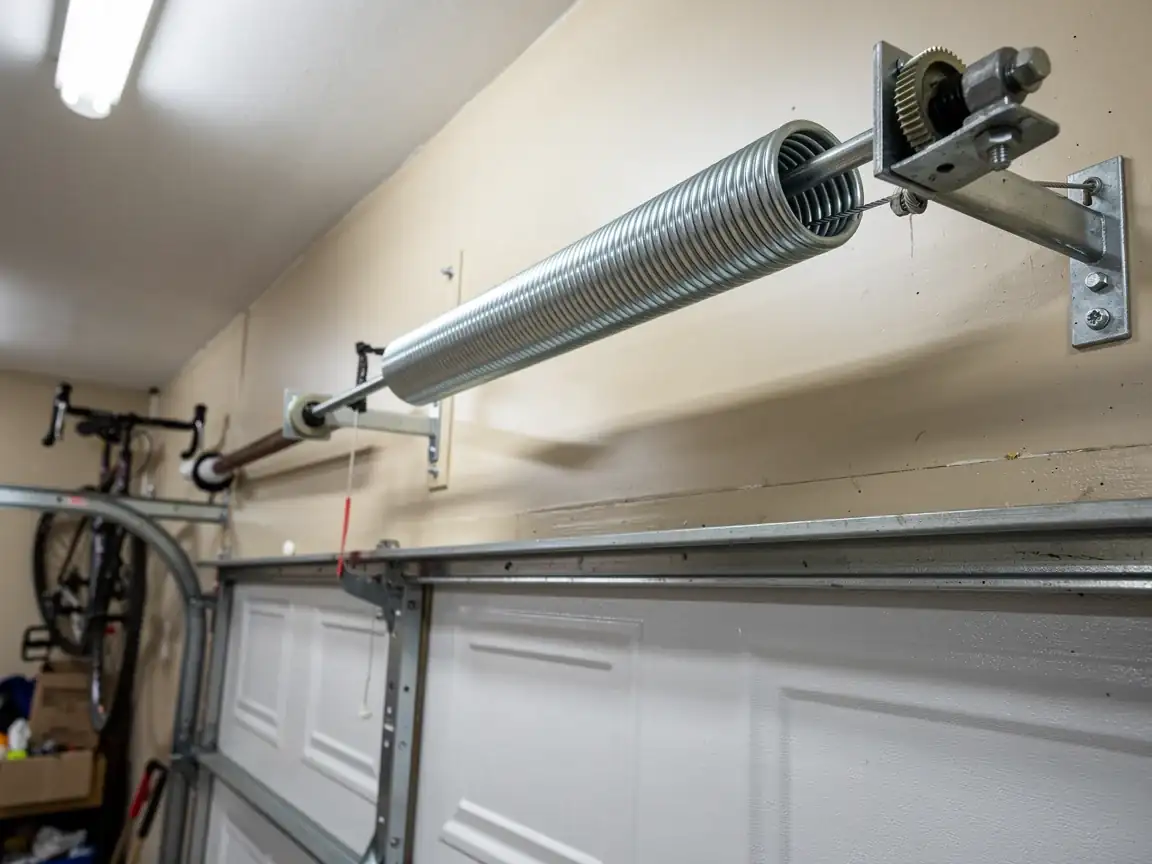
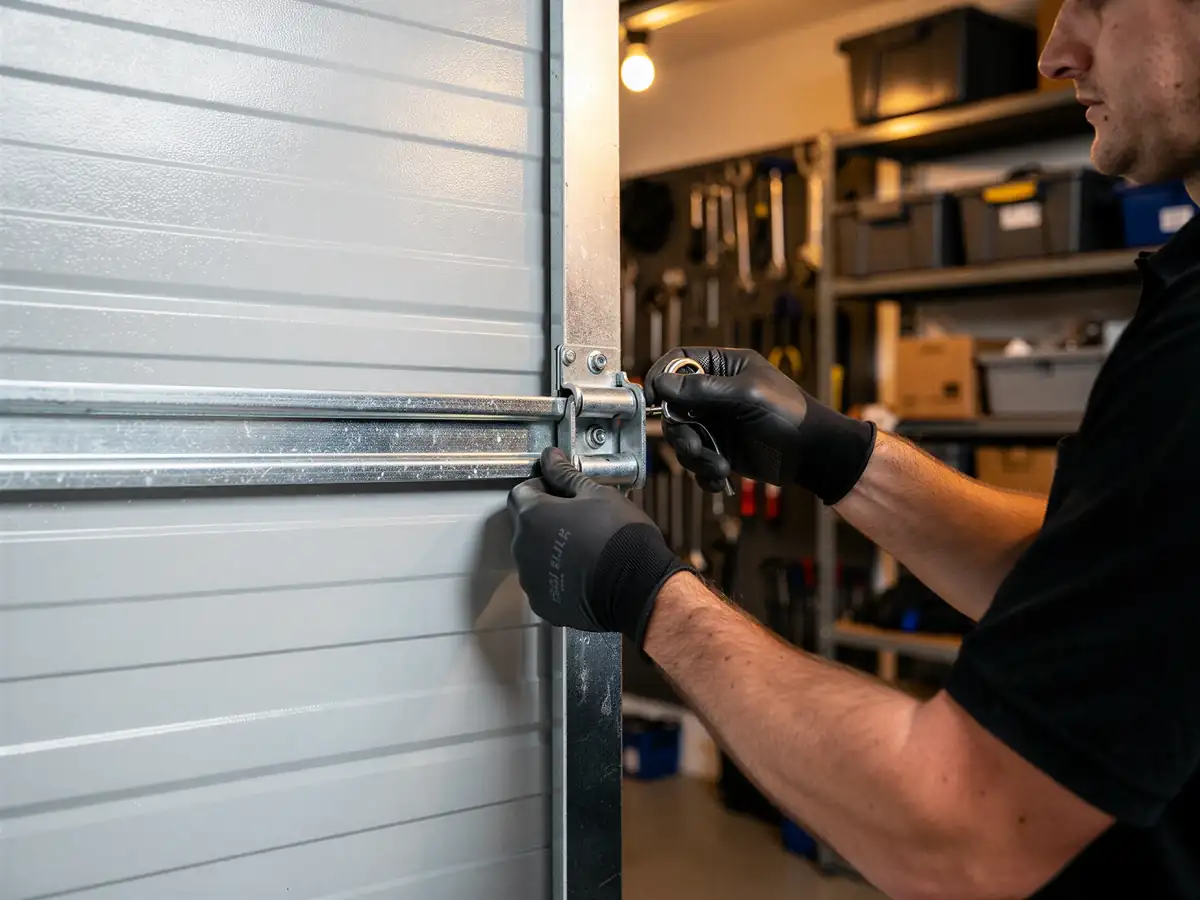
Freeing a roller that's binding, or tightening a loose opener bracket, is reasonable for someone comfortable on a ladder. A broken torsion spring is not - the spring on a double door built in this era is under enough stored tension to break a hand or worse, and the winding bars for it aren't something most garages have lying around. If the door is off its track entirely, leave it; forcing it back on without releasing the spring tension first is how a repair turns into an ER visit. Given the drive out from Irvine, it also doesn't make sense to attempt a fix, fail, and then call us for the same job twice - if you're not sure which category the problem falls into, call first and describe what you're seeing.